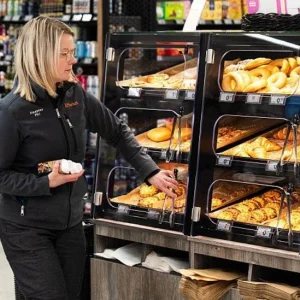
In the event of a foreign attack on Finland, Janne Ahtoniemi’s first move wouldn't be to grab a rifle—it would be to ensure the nation's supply chains hold firm. Rather than serving in the traditional military ranks, Ahtoniemi spearheads risk management for S Group, a major Finnish supermarket network. His critical mission is to guarantee that Finland’s 5.6 million citizens do not run out of food during a crisis, whether stemming from a conventional military invasion or a crippling nationwide cyberattack.
This corporate-led readiness is a cornerstone of Finland’s newly intensified "comprehensive security" doctrine. Historically known as "total defence," the strategy requires seamless coordination between military forces and the civilian sector. While Nordic nations have championed this model for decades, Finland—which shares a massive 1,340km border with Russia—shifted its preparations into overdrive following the 2022 invasion of Ukraine.
Outlined in a pivotal government framework known as The Security Strategy for Society, the initiative mandates that critical private enterprises join government-led preparedness committees. Organizations spanning the grocery, cybersecurity, defense, and transport sectors frequently engage in rigorous national emergency drills alongside local authorities.
"Finland's strong security of supply is based on decades of consistent preparedness and training," Ahtoniemi explains. He emphasizes that the corporate sector fully embraces its duty to the nation, making the heavy investment of time and resources into these survival exercises a willing and expected sacrifice.
This operational vigilance is echoed across the entire retail industry. Jyrki Tomminen, an executive at rival grocery giant Kesko, stresses that their ultimate goal is to keep daily Finnish society functioning regardless of the external threat level. By law, food corporations are required to maintain strategic stockpiles of vital caloric essentials like cooking oil, flour, and sugar. These reserves aren't sitting in standard distribution centers; they are heavily protected, often stashed in fortified underground bunkers equipped with independent backup power grids.
However, corporate readiness is only half the equation; individual civic responsibility completes the defense strategy. Northern European security expert Tom Woolmore notes that national defense in Finland is a highly practical, universal expectation rather than a theoretical concept.
Professor Frank Martela exemplifies this mindset. By day, he teaches philosophy at Helsinki's Aalto University. But as a navy reservist, he remains on permanent standby for national emergencies. Acknowledging that modern warfare extends far beyond physical combat into information and digital arenas, Martela knows he might not be sent back to a warship. Instead, he expects to be deployed exactly where his contemporary skills are most useful. "When something happens, I will be told what to do," he says.
What drives this extraordinary level of civilian compliance and corporate sacrifice? According to Dr. Jennifer De Paola, a psychologist at Helsinki University, the answer lies in deep-rooted cultural values: an unwavering trust in government and a profound, collective desire for security.
Dr. De Paola’s research involving 10- to 12-year-old Finnish children revealed a fascinating psychological baseline. When asked to draw happy and unhappy people, the children overwhelmingly associated happiness with safety, rather than excitement or joy. This childhood prioritization of security matures into a powerful adult trust in the state.
"We really trust our institutions much more than in other countries," Dr. De Paola notes, pointing to Finland's notoriously low corruption rates as a key factor. Professor Martela adds that the nation's high levels of social equality naturally foster this interpersonal trust.
While institutional faith may be fracturing in many other parts of the modern world, Finland continues to prove that a united, deeply trusting society is ultimately the strongest defense system of all.