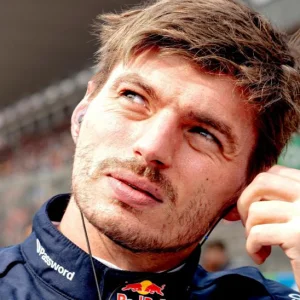
Max Verstappen is openly weighing an early departure from Formula 1, placing the ball squarely in the court of the sport's leadership to retain its four-time world champion. Following the Japanese Grand Prix, the Dutch driver reiterated his deep dissatisfaction with F1's newly implemented engine regulations.
The crux of Verstappen's frustration lies in the hybrid power units, which demand an equal split between internal combustion and electrical power. This heavy emphasis on energy management has drastically altered the racing experience, leading Verstappen to describe the current style of driving as fundamentally flawed.
"I'm not enjoying the whole formula behind it, it doesn't feel natural to a racing driver," Verstappen revealed. "Of course I try to adapt to it, but it's not nice the way you have to race. It's really anti-driving. Then at one point, yeah, it's just not what I want to do."
Despite Red Bull's noticeable struggles on the track this season, Verstappen insists his criticisms are strictly about the regulations, not his lack of competitiveness. Red Bull leadership, however, appears to be banking on raw performance to change his mind. Team principal Laurent Mekies stated that their current focus is purely on improving the car, expressing confidence that providing a vehicle capable of pushing the limits will naturally result in a "much happier Max."
However, Verstappen is merely the loudest voice in a growing chorus of driver dissatisfaction. While F1 executives previously defended the new power units for supposedly improving race-day battles, they have already acknowledged a negative impact on qualifying. Drivers are increasingly frustrated by having to navigate some of the calendar's fastest, most iconic corners at reduced speeds just to harvest necessary electrical energy.
The Japanese Grand Prix further exposed the dangerous reality of these energy management strategies during actual racing conditions. A terrifying 50G crash involving Haas driver Oliver Bearman at the notorious Spoon Curve was directly attributed to a staggering 50km/h speed differential between his car and Franco Colapinto's Alpine.
This alarming incident has validated the grid's underlying safety fears. Carlos Sainz, representing Williams and serving as a director of the Grand Prix Drivers' Association, highlighted the on-track chaos, noting that drastic speed disparities and boost management caused numerous close calls during the frantic opening laps at Suzuka. As safety concerns compound the frustration over the driving experience, F1 bosses face mounting pressure to address a formula that is actively alienating its biggest star.