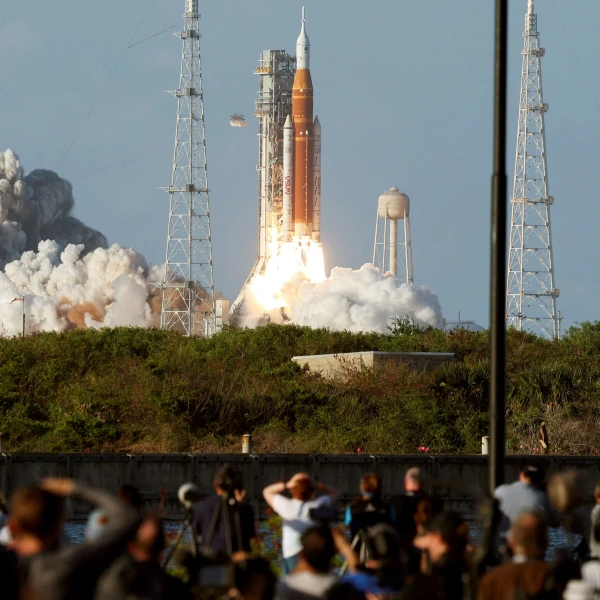
As the Artemis II mission concludes this Friday, its journey has captivated audiences with gripping, real-time theater: the cluttered cabin, distant glimpses of a blue-and-white Earth, and astronaut Christina Koch's floating hair all evoke a profound sense of wonder at a time when such inspiration is sorely needed. This new chapter in space exploration promises grand, perilous adventures, yet for many, it echoes a past that feels impossible to replicate.
For those who witnessed the Apollo 11 moon landing in July 1969, the event was life-changing. Before that moment, human footsteps on a celestial body existed only in science fiction or cartoons. "Fly Me to the Moon" was merely a Frank Sinatra love song, and home computers were unheard of. Recapturing that extraordinary awe 57 years later, amid generations of technological leaps, proves challenging—if not impossible.
One observer recalls staring up at the pockmarked moon on a hot Oklahoma night, struggling to comprehend that two astronauts were actually there. Legendary news anchor Walter Cronkite famously admitted his speechlessness, muttering, "Wow! Jeez!"—a raw, human reaction that still resonates. The context then was radically different: the computing power required to reach the moon seemed almost mystical. At the time, early military computers like the 200-pound Field Artillery Digital Automatic Computer (FADAC) required dedicated generators for basic tasks; today, an iPad could replace it, and even ordinary cars house dozens of onboard computers.
While spaceflight wasn't new—Yuri Gagarin's journey preceded Apollo 11 by eight years—nothing prepared the world for seeing humans stand on the lunar surface, with Earth resembling a tiny marble in the backdrop. In his coverage for The Times, science writer John Noble Wilford captured the widespread incredulity, noting that the sharp, black-and-white TV images of the lunar module and astronauts seemed "unreal, more like a toy and toylike figures" than a historic expedition. Despite this, conspiracy theories about faked Apollo landings persist, underscoring how disbelief has evolved over decades.
Artemis II reignites that lunar dream, but in an era saturated with technology, the challenge lies in transcending nostalgia to forge a new legacy of wonder.