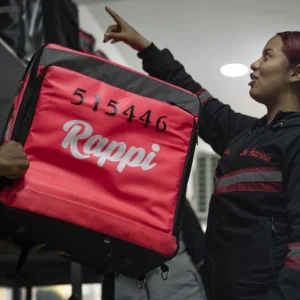
The streets of Bogotá are colored by the bright orange delivery bags of Rappi, serving as a vibrant reminder of Colombia's evolving economic landscape. Once burdened by a turbulent past, the nation has transformed into a thriving hub for tech entrepreneurship, drawing talent and digital nomads from North America and Europe following its historic 2016 Peace Accord. Today, Rappi stands as a towering $5 billion unicorn with 35 million monthly active users, acting as the flagship of this digital renaissance.
The momentum across the country is undeniable. A recent KPMG report identified roughly 2,100 startups operating in Colombia—a 24% surge from the previous year. According to Maria Peñaranda, KPMG Colombia’s manager of emerging giants and innovation, this explosion of early-stage ventures firmly positions Colombia as Latin America's second-largest startup ecosystem, trailing only Brazil. Pioneering companies like global payments platform Yuno and renewable energy firm Erco Energy are proving that the ecosystem can produce sustainable, high-revenue businesses capable of regional expansion.
Another standout is Foodology, a venture capitalizing on the "dark kitchen" model to operate virtual restaurants. Founded in 2019, the Bogotá-based company has raised over $60 million and achieved profitability while managing thousands of digital storefronts through its proprietary inventory software. Co-founder and CEO Daniela Izquierdo notes that because Colombia's domestic market is relatively small, successful local founders are naturally pushed to scale rapidly into neighboring countries like Mexico and Peru.
Yet, behind these high-profile success stories lies a growing hurdle: a severe capital drought. While the Latin American market experienced an investment frenzy between 2021 and 2022—sparked largely by SoftBank’s 2019 regional innovation fund—that tide has drastically receded.
"The stock market plummeted and VC funding generally across the world slowed down," explains Izquierdo. "And while VCs will say they want to invest in emerging markets, when the market is going down, I feel that's the first thing that goes."
With international venture capitalists pulling back, Colombian founders are struggling to secure the runway needed to survive. Daniel Vásquez, managing partner at U.S.-based Actions Capital, warns that promising enterprises are collapsing simply because they cannot secure bridge rounds to reach profitability.
The core issue, Vásquez points out, is a historical reluctance among local institutions and wealthy families to invest in domestic technology and research.
"We need local institutions, businesses, and families to invest more in technology," Vásquez says. "When VCs come and they see that locals are under-investing, they see that as a sign of little opportunity. That message needs to change."
For companies that locked in funding during the boom years, the landscape is considerably brighter. Habi, a property tech unicorn that digitizes real estate transactions, secured a massive $200 million round thanks to the broader accessibility of capital prior to the current downturn. However, even Habi's co-founder, Brynne McNulty Rojas, emphasizes the critical need for a stronger domestic investment culture, noting that local backers are essential for navigating on-the-ground operational challenges.
Despite the tightening financial climate, veteran founders remain deeply optimistic about Colombia's long-term potential. With an abundance of high-caliber talent and a rapidly modernizing consumer base, the ecosystem is primed for its next evolution—if the investment capital can catch up to the innovation.