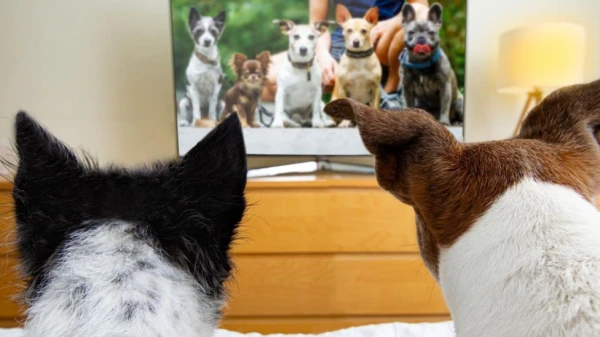
When Luca Carano left his dog Luna home alone in Barcelona six years ago, a simple idea sparked a global phenomenon. "I was thinking right then, she's going to be bored and lonely, there should be something on YouTube for Luna," recalls Carano, a pilot who now lives in Bologna, Italy.
That thought led to the creation of Siesta Dog TV, a YouTube channel featuring videos specifically designed for canine viewers. With calming ambient music and visuals optimized for dogs' color perception—particularly blue hues they see more clearly—these videos have attracted millions of views.
"I've seen how Luna enjoys these videos, and I get so many comments from people who say they feel great leaving their dog alone with my videos because it calms them," Carano explains.
A Growing Industry
What began as one man's solution has snowballed into an entire industry. Dozens of channels now stream content for dogs, including Four Paws TV, Cartoon Dog Music, Puppy Dreamscape, and Sleepy Cats. The content ranges from puppies frolicking and close-ups of squirrels to loops of squishy toys enjoyed by other animals.
Nicholas Dodman, director of the Center for Canine Behaviour Studies in Connecticut, attributes this growth to changing human-animal relationships. "People are more closely attached to their dogs than ever before and they treat them like children and worry about leaving them alone," he says. "There's also more awareness these days about separation anxiety affecting dogs."
Artificial intelligence has made content creation easier. "Some of our videos are AI, some are hand-drawn, and technology allows us to make the videos set wherever we want, like Hawaii," says Carano. "And when it comes down to it, dogs don't care if what they are seeing is AI."
The Science Behind Dog TV
But do dogs actually watch television, and does it benefit them? Research presents a mixed picture.
A 2023 study from Queen's University Belfast examined the reactions of 50 shelter dogs to different screens. The findings were modest: dogs spent only 10.8% of available viewing time looking directly at television monitors. The report noted, "The dogs in this investigation directed relatively little attention towards the television monitors and habituated to their presence within a short period of time."
The authors emphasized that traditional forms of enrichment remain crucial. "The provision of social contacts, both with other dogs and with humans, is essential and should be considered the most important form of environmental enrichment for confined dogs."
Ilyena Hirskyj-Douglas, an assistant professor at the University of Glasgow's School of Computing, conducted studies showing dogs typically can't watch videos for extended periods. "I noticed short bursts of video consumption from dogs," she reports, though her research involved only two dogs.
Other studies are more optimistic. Research from Auburn University, published in July 2023, surveyed 453 dogs whose owners reported they already watched TV. The study concluded: "Dogs experience a meaningful, object-filled world when they view television. Engagement with television could provide dogs with an enriching, meaningful experience."
The Pioneer's Perspective
Beke Lubeach, CEO of Arizona-based DogTV—which launched in the U.S. in 2012—is convinced of the benefits. "Our videos help lower stress in dogs," she states, citing a Purdue University study that found kennel dogs watching videos spent less time pacing and more time grooming and resting.
DogTV takes a different approach from many newer services. "Many copycat services are turning to AI to mass-produce content, but at DogTV, we don't believe shortcuts belong in pet wellness," Lubeach explains. "While we are actively testing AI and beginning to use it on a limited basis within select production elements, we are doing so thoughtfully and with strict oversight."
The company enhances colors in post-production to appeal to canine vision. "What's interesting is when you enhance the reds, the greens, it gives the video more dimension so that it makes the colours pop out and helps dogs see them better," Lubeach notes.
DogTV also creates content resembling exposure therapy for common canine fears. "Because so many dogs are afraid of fireworks or going on car rides, videos of those experiences could help nervous dogs to work through those fears," Lubeach says. "The more dogs get to see it in a controlled environment, the less anxious they'll be when they go out and experience it."
Individual Differences Matter
Lubeach emphasizes that television preferences vary by dog and breed. Content showing dogs resting by a field might relax one dog, while another might prefer more stimulating scenes of dogs chasing each other in a park.
For less active dogs, television can provide mental stimulation. "Video content is mental stimulation for senior dogs and for lazy dogs, because if they aren't being physical often they still need to exercise their mind," Lubeach adds.
As the dog TV industry continues to expand, the debate about its effectiveness persists. What's clear is that for millions of pet owners seeking to comfort their canine companions, the screens will keep glowing—whether dogs are truly watching or simply enjoying the company of moving images and soothing sounds.