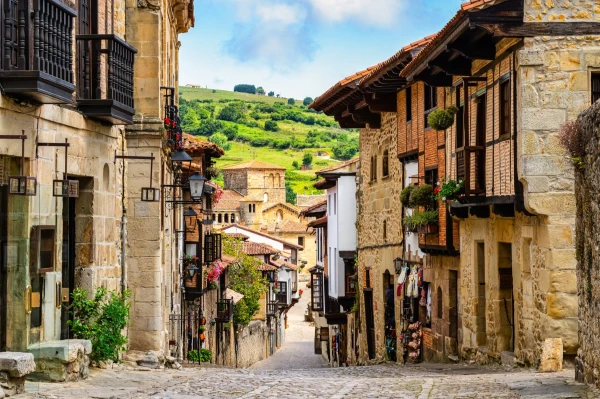
Nestled along Spain's northern coast, Cantabria offers a remarkable journey through time, where prehistoric art, medieval charm, and modern philosophy converge in a single breathtaking region.
At the heart of this temporal exploration are the UNESCO World Heritage caves of Altamira, El Castillo, and Monte Castillo. These subterranean galleries preserve humanity's earliest artistic expressions—bison, horses, and handprints dating back 40,000 years. As archaeologist Dr. Elena Martínez notes, "These aren't just drawings; they're windows into the minds of our ancestors, revealing a sophisticated understanding of symbolism and storytelling that predates written language by millennia."
From these ancient chambers, travelers can leap forward to the medieval splendor of Santillana del Mar, often hailed as Spain's most picturesque town. Its cobblestone streets, Romanesque architecture, and perfectly preserved stone buildings create an atmosphere that feels suspended between centuries. The Colegiata de Santillana, a 12th-century collegiate church, stands as a testament to the region's religious and architectural heritage.
Perhaps most surprisingly, Cantabria also claims a connection to 20th-century existentialism. The philosopher Jean-Paul Sartre spent significant time here during the Spanish Civil War, finding inspiration in the dramatic landscapes and political turmoil. Local historian Miguel Ángel Fernández explains, "Sartre's experiences in Cantabria influenced his thinking about freedom and responsibility. The region's stark beauty and complex history provided a powerful backdrop for his philosophical development."
This unique combination of attractions—spanning from humanity's artistic dawn to modern intellectual history—makes Cantabria more than just another Spanish destination. It's a living museum where each era has left indelible marks, inviting visitors to contemplate the continuum of human experience against a backdrop of rugged coastline, green mountains, and timeless villages.