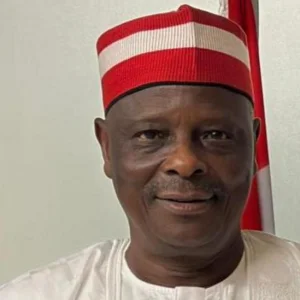
Nigeria's political landscape is experiencing a massive tremor following the announcement that influential opposition figure Rabiu Musa Kwankwaso has defected to the African Democratic Congress (ADC). The strategic move creates a formidable mega-coalition aimed at unseating President Bola Tinubu's All Progressives Congress (APC) in the upcoming general elections.
The former Kano state governor officially pledged his allegiance to the ADC on Monday, just 24 hours after severing ties with the New Nigeria People's Party (NNPP). Declaring a "strategic realignment," Kwankwaso told his supporters that the nation's current trajectory demanded a new vehicle for change. Taking to social media, he heralded the transition, posting: "New dawn. We are ADC," alongside footage of ecstatic, red-capped supporters celebrating his arrival.
By joining the ADC, Kwankwaso aligns himself with two other towering figures in Nigerian politics: former Vice-President Atiku Abubakar and former state governor Peter Obi. Together, the trio represents the second, third, and fourth-place finishers from the fiercely contested 2023 presidential race.
While the consolidation of Tinubu's biggest rivals under a single umbrella is a massive victory for the opposition, it also introduces a highly volatile dynamic. The ADC now faces the daunting challenge of selecting a single presidential candidate from a roster of political titans, a decision that threatens to ignite internal power struggles.
Kwankwaso brings exceptional political capital to the alliance. His fiercely loyal grassroots base, famously known as the Kwankwasiyya movement and instantly recognizable by their trademark red caps, gives the coalition a critical foothold in the predominantly Muslim north—a decisive voting bloc in national elections. Furthermore, his tenure as a former defense minister positions the ADC to heavily critique the current administration's handling of Nigeria's persistent security crises.
The defection arrives as Nigeria's traditional opposition powerhouses—the People's Democratic Party (PDP) and the Labour Party (LP)—are hobbled by intense internal fracturing. The PDP, long the dominant opposition force, has effectively split into rival factions, leaving a vacuum the ADC is eager to fill. Meanwhile, the ruling APC has already signaled its intention to back President Tinubu for a second term in January 2027.
Kwankwaso's political transition follows a brief stint in international headlines earlier this year. In February, US Republican lawmakers controversially included his name in a proposed sanctions bill regarding the alleged persecution of Christians in Nigeria. The Nigerian government vigorously denied claims of a religiously motivated genocide, noting that violence in the region affects all faiths, while his former allies in the NNPP fiercely defended Kwankwaso against any links to religious extremism.
As the political chessboard reshuffles, Nigeria's electoral framework is also undergoing changes. The country's electoral commission has introduced reforms to transmit polling station results electronically in real time to prevent the controversies that marred the 2023 vote. However, opposition figures have already raised red flags over a loophole allowing for manual vote sorting during internet outages, warning it could be weaponized to undermine election transparency.