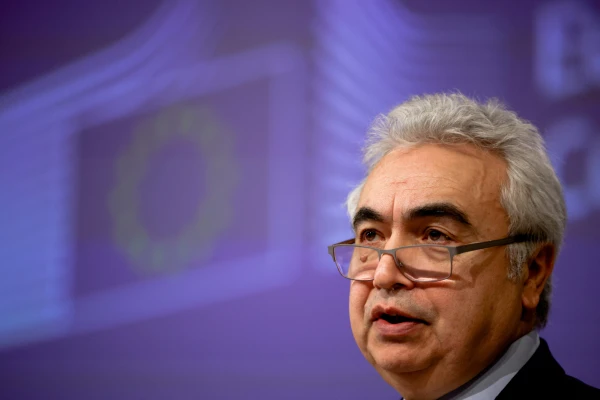
WASHINGTON, United States – The head of the International Energy Agency (IEA) issued a stark warning Monday, stating that April could prove significantly more challenging for global energy markets than March due to escalating disruptions from the Middle East conflict.
IEA Executive Director Fatih Birol explained that while March shipments largely consisted of cargo loaded before the crisis began, "during the month of April, nothing has been loaded." He emphasized, "The longer the disruption is, the more severe the problem becomes."
Birol made these remarks following a meeting at the International Monetary Fund (IMF), where he joined leaders from the IMF and World Bank as part of a newly formed group coordinating responses to the war's economic fallout.
The IEA is closely monitoring energy infrastructure in the region, noting that among over 80 affected facilities, more than a third have sustained severe damage. Birol reiterated that the world faces a major energy security challenge, stressing that "no country is immune to this problem."
IMF Managing Director Kristalina Georgieva echoed concerns, highlighting the need to assess the full impact of infrastructure damage. World Bank President Ajay Banga added that both institutions are preparing for various conflict scenarios, with financing ready to be deployed.
The IMF has made up to $50 billion available, while the World Bank could provide up to $25 billion initially, potentially increasing to $60 billion over six months if hostilities persist.
The crisis intensified after US-Israeli strikes targeting Iran in late February prompted Tehran to effectively block the Strait of Hormuz, a critical passage for energy shipments. Although a two-week truce was agreed last week to facilitate negotiations, weekend talks in Islamabad collapsed, leading to a US naval blockade of the strait.
Mediators Pakistan and Qatar called for ceasefire adherence Monday, while UN Secretary-General Antonio Guterres urged restoration of freedom of navigation in the region.