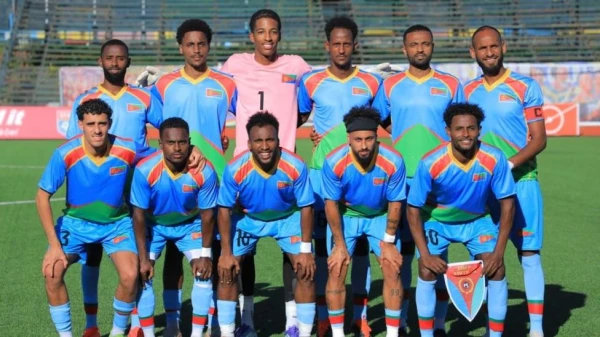
Seven members of Eritrea's national football team have disappeared after a landmark international match, casting a shadow over what should have been a triumphant moment for the country's sports program.
According to sources close to the squad, the players failed to return home following Eritrea's 2-1 victory over Eswatini last week—a win that secured the team's first Africa Cup of Nations qualifying group stage appearance in nearly two decades. While some teammates flew back via South Africa, the seven athletes reportedly absconded, with some sightings reported in South Africa.
"Only 10 of the 24-man squad were based in Eritrea, and just three of those players—including team captain Abelom Teklezghi—have now returned," sources in Asmara revealed.
The missing players include goalkeeper Kubrom Solomon and veteran winger Medhanie Redie. Eritrea's state media, which typically celebrates such sporting achievements with fanfare, has remained unusually silent about the team's return. Preparations for a celebratory reception were reportedly canceled upon learning of the disappearances.
This incident continues a troubling pattern spanning over two decades. Eritrean athletes across various sports have repeatedly failed to return home after international competitions:
- In 2019, seven under-20 players vanished after a tournament in Uganda.
- In 2015, ten senior squad players refused to return from Botswana.
- In 2013, fifteen players and a team doctor were granted asylum in Uganda.
- In 2009, nearly the entire senior team disappeared after a match in Kenya.
Human rights organizations have long described Eritrea's government as repressive—a charge officials deny. Despite its small population, hundreds of thousands of Eritreans have sought asylum abroad.
For many Eritrean fans who hoped the victory over Eswatini would spark a football renaissance, this latest development carries a painfully familiar echo, overshadowing athletic achievement with deeper questions about why so many athletes choose not to come home.