
European officials had long anticipated the storm. For weeks, the continent's policymakers kept a close eye on the amassing US military forces in the Middle East, listening intently to the Trump administration’s stark ultimatums demanding Tehran abandon its nuclear ambitions.
However, following the launch of the joint US-Israeli offensive against Iran three days ago, Europe has appeared thoroughly disorganized. Trapped in a rapidly accelerating crisis, the continent seems stripped of diplomatic leverage and broadly divided on how to react.
Naturally, individual nations are scrambling to secure the safety of their citizens in the conflict zone, drawing up complex contingency plans for the potential evacuation of tens of thousands. Leaders are equally anxious about the economic ripple effects poised to hit domestic consumers. The specter of skyrocketing food and energy bills looms large, with European gas prices already surging to heights unseen since Russia's full-scale invasion of Ukraine in 2022.
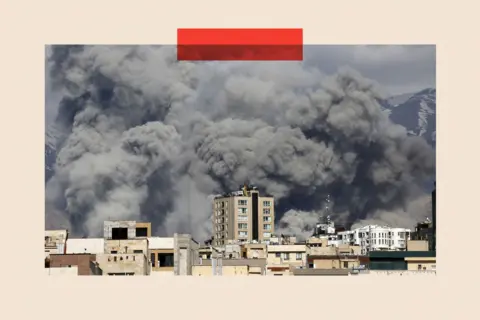
On the diplomatic stage, forging a unified European stance regarding the dizzying pace of Middle Eastern developments has proven nearly impossible.
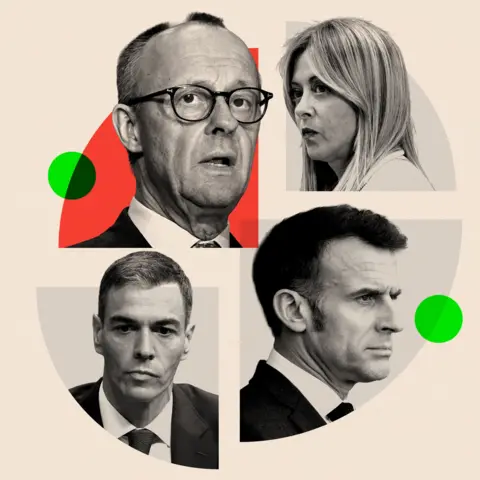
While the traditional heavyweights—France, Germany, and the UK—managed to release a collaborative weekend statement warning Tehran to halt its "indiscriminate attacks" or face "defensive action," their subsequent moves have varied drastically. The UK consented to a US request to utilize two British military bases for "defensive" strikes against Iranian missile installations, though President Trump publicly criticized London for not contributing more robustly. Concurrently, France is reinforcing its regional footprint following an Iranian strike on a French base in the UAE. Germany, meanwhile, affirmed its troops are prepared for defensive measures if attacked, but entirely ruled out any offensive participation.
Tellingly, none of these leading nations have publicly questioned whether the US-Israeli strikes comply with international law. This glaring omission was mirrored in the recent social media broadcasts from the EU's foreign policy chief, Kaja Kallas.
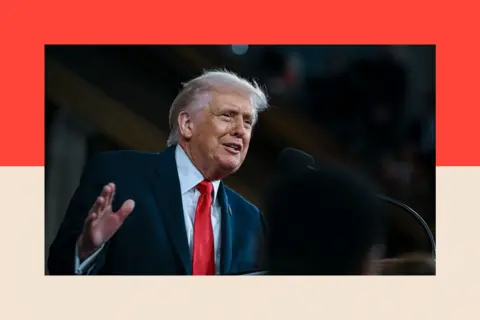
At the heart of this cautious tiptoeing is a desperate desire not to antagonize Donald Trump. European capitals are terrified that the intensifying Middle Eastern conflict will divert the US president's attention away from brokering a sustainable resolution to the war on their own continent: Ukraine.
Yet, this strategic ambiguity raises uncomfortable questions. Europe frequently champions a rules-based international order, but its reluctance to scrutinize the legality of recent American military interventions in places like Iran or Venezuela leaves observers wondering precisely what those rules entail.
Spain stands out as a stark exception. Prime Minister Pedro Sánchez took to social media to assert that one can condemn Tehran's "hateful regime" while simultaneously opposing a "dangerous military intervention outside of international law." Backing his rhetoric with action, Madrid denied the US the use of its bases for Iranian operations, prompting several American aircraft to depart Spain on Monday.
This fracture is mirrored within the broader European Union, which looks spectacularly misaligned. While the bloc's foreign ministers released a cautious statement that pointedly avoided calling for regime change in Tehran, European Commission President Ursula von der Leyen directly contradicted them on Sunday by demanding a "credible transition in Iran."

Such glaring discrepancies highlight a continent struggling to speak with a single voice, despite its loud ambitions to act as a cohesive security and defense bloc in an era of renewed great power competition.
A Nuclear Shift
The geopolitical landscape of 2026 has been defined by cascading crises across Venezuela, Greenland, and Iran. Europe currently navigates a perilous triad: an aggressive Russia to the east, an economically dominant China, and an increasingly erratic ally in the United States.
In a landmark move on Monday, French President Emmanuel Macron declared a profound shift in France’s nuclear doctrine, confirming an expansion of its nuclear warhead stockpile because "our competitors have evolved, as have our partners."
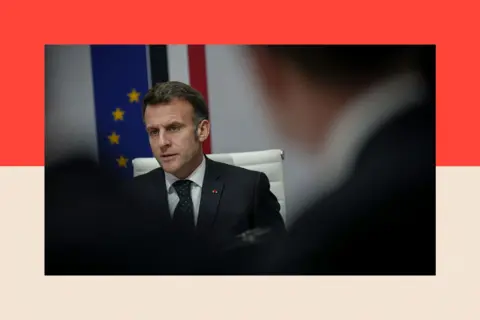
With Russia boasting the world's largest nuclear arsenal and China rapidly expanding its own, European capitals are growing anxious. For decades, the US has extended its formidable nuclear umbrella over the continent, but shifting American priorities have severely rattled European confidence.
Consequently, nations like Sweden, Germany, and Poland have directly petitioned France to broaden its nuclear deterrent to supplement the existing protection offered by the UK and NATO.
Macron's announcement serves as a vindication of his long-standing, often-ignored campaign for European strategic autonomy in defense—a vision that includes joint investments in dual-use satellite technology via the European Space Agency.
However, achieving true defensive synergy remains a monumental hurdle. Procurement exposes the depth of the dysfunction: while the US relies on roughly 30 major weapon systems, Europe maintains a staggering, overlapping 178. As European Parliament President Roberta Metsola bluntly summarized last week, the current approach is "inefficient, expensive and slow."
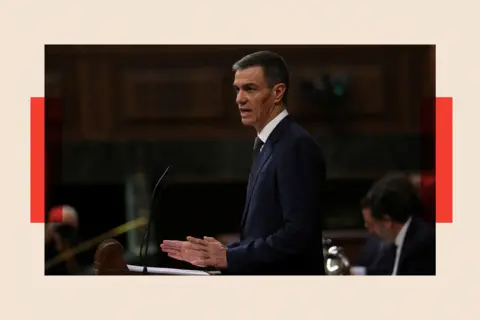
NATO has attempted to streamline acquisitions across its 32 member states, but compliance with its guidelines remains strictly voluntary. While virtually all NATO members (with the exception of Spain) succumbed to pressure from Donald Trump last year to boost defense budgets, throwing money at the problem is futile if it isn't spent strategically. Instead, most national governments instinctively prioritize their domestic defense contractors over continental efficiency, an accusation frequently leveled at Paris.
Priorities Shaped by History
The chaotic fallout from the Middle East underscores a fundamental truth: European nations are bound by wildly different historic traumas, domestic anxieties, and geopolitical priorities.
Germany’s categorical refusal this week to expand its Middle Eastern military footprint or join offensive operations is deeply rooted in its conflict-averse national psyche. The shadows of the 20th century still dictate Berlin's modern military posture.
Just four years ago, Germany faced global ridicule for hesitating to supply tanks to Ukraine at the onset of the Russian invasion. At the time, former Chancellor Olaf Scholz reveled in the press moniker "Friedenskanzler" (Peace Chancellor), reflecting a populace deeply uneasy with the prospect of German weapons once again firing on Russian forces.
Under the current leadership of Friedrich Merz, however, Berlin is charting a dramatically altered course. Overcoming historical paralysis, Germany has transformed into the largest single contributor of military aid to Ukraine.
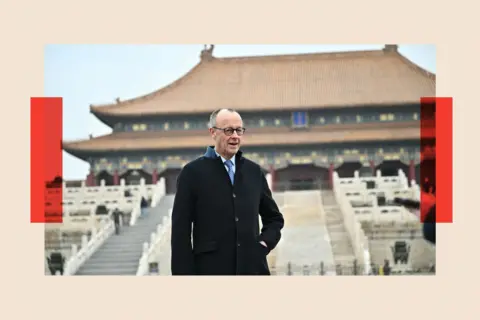
Like its neighbors, Germany has comfortably relied on American military supremacy for generations. But as the Trump administration increasingly insists on conditional support...