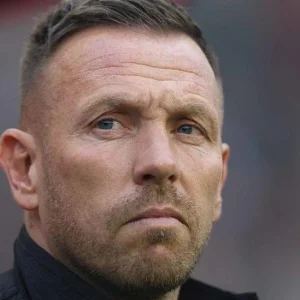
Seated in his minimalist office at Dragon Park in Newport, Craig Bellamy projects his laptop screen onto the wall, revealing a desktop buried under a labyrinth of tactical files. The physical space around him is starkly uncluttered, decorated only by a copy of his autobiography, a pair of framed Welsh jerseys, and a poignant photograph of his late friend and predecessor, Gary Speed.
Bellamy prefers this development center over the Football Association of Wales' corporate headquarters. To him, Dragon Park breathes football—and football is the only language he truly feels comfortable speaking.
"Socially I can be very awkward—not on purpose—but when it comes to football, I'm really open and happy," Bellamy admits. "If a person wants to stop me in the street and talk football, unfortunately, you can't get rid of me."
While the long stretches between international fixtures might serve as a relaxing break for some managers, Bellamy views them as a canvas for endless, borderline-obsessive preparation. He readily admits to overworking, a habit he manages by reminding himself not to let inevitable tactical changes "break his heart" after pouring hours into analysis.
His preparation extends far beyond the confines of a traditional scouting report. With Wales set to face Bosnia and Herzegovina in a crucial World Cup playoff semifinal this March, Bellamy recently spent his evening watching a film about the Balkan conflict to better understand the cultural fabric of his opponents.
"I need to see who they are, what they come from," he explains, noting he takes the same anthropological approach to nations like Kazakhstan and Liechtenstein. "I love history. History, geography, football. They all fit in—they're my three favorite things. It's how I relax. I get a better understanding of people and a completely different respect for them off the back of it."
Though he deeply misses the relentless daily rhythm of club management, Bellamy fills his downtime with a frantic schedule of speaking engagements and networking visits to top Premier League clubs. Keeping his mind constantly engaged is a necessity, but he has finally found a reliable way to unplug: his children.
"I find switching off is having two young ones. Their moments are their moments, and then you're all in," Bellamy shares. "Whether it's Barbie, Beauty and the Beast, playing with dolls or whatever. My daughter will wake me up in the morning to play before she goes to school. They're really important moments for me, and my partner as well, so I try to be present and listen to every conversation."
This grounded, deeply reflective version of Bellamy stands in stark contrast to the snarling, temperamental striker fans remember from his playing days. He openly discusses how the relentless "survival" mentality of a professional player made him fiercely combative and emotionally closed off. Having battled depression and candidly acknowledged the toll his playing career took on his first marriage, Bellamy is now profoundly committed to emotional presence and communication.
When he accepted the Wales job in July 2024, many assumed his tenure would be a brief stepping stone back to the club level, likely concluding after the 2026 World Cup. However, the tantalizing prospect of managing his country at Euro 2028—a tournament Wales is set to co-host—has radically shifted his timeline and his appreciation for the present.
"Very few people get this opportunity, so enjoy every second of it because it's not here forever," Bellamy reflects. "I don't think anyone would want me here forever! So I try to relish it. Even if I left tomorrow, I'd look back like, 'Wow, this was amazing.'"