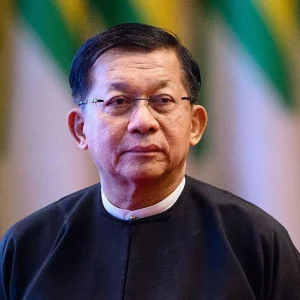
Five years after orchestrating a devastating military coup, Myanmar's junta chief Min Aung Hlaing is officially in line to become the country's next president.
His nomination unfolded on Monday as Myanmar's newly minted parliament convened. Following a highly controversial general election spanning December and January—which international critics widely dismissed as an orchestrated sham—the path to the presidency is practically guaranteed for the heavily sanctioned military leader.
The junta originally touted the recent elections as a stepping stone toward national peace. However, major opposition factions were legally barred from participating, and ongoing armed conflicts prevented voting across vast swathes of the country. Consequently, an overwhelming 90% of the newly seated lawmakers are fiercely loyal to Min Aung Hlaing, comprising either active-duty military personnel or representatives from the military's proxy party.
Securing the presidency has long been a driving ambition for the general. Analysts note that the military party's humiliating defeat in the democratic 2020 elections—and his subsequent realization that he would be denied the top political office—was a primary catalyst for the violent coup that deposed civilian leader Aung San Suu Kyi.
However, the transition to a civilian title comes with a significant constitutional hurdle: Min Aung Hlaing must relinquish his role as commander-in-chief of the armed forces. Handing over direct military control presents a notable risk, particularly given internal rumblings of dissatisfaction among certain senior military ranks.
To insulate his power, the coup leader has handpicked General Ye Win Oo—a staunch loyalist notorious for his ruthless crackdowns on political dissidents—to succeed him as military chief. Additionally, Min Aung Hlaing has established a new overarching consultative council under his own leadership, strategically ensuring he retains sweeping authority over both civilian and military affairs regardless of his official title.
Ultimately, this impending presidency marks a cosmetic shift rather than a substantive political change. For the millions of citizens displaced by the ongoing civil war and the thousands who have lost their lives, the new administration represents nothing more than the existing military regime operating under the guise of civilian governance. There remains no indication that Min Aung Hlaing intends to halt the violent suppression of his opponents.