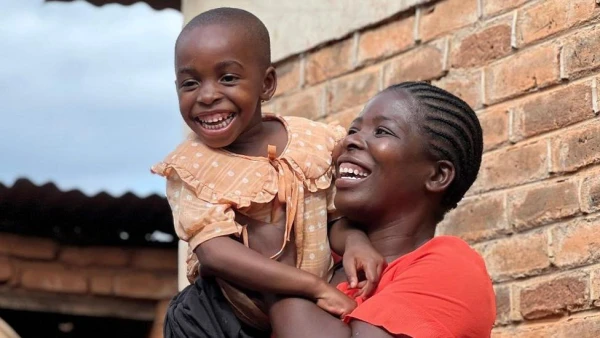
In a small home in northern Malawi, Martha Ongwane watches her four-year-old daughter Rachael with a love she once thought impossible. Just two years earlier, overwhelmed by her child's autism diagnosis and the isolation that followed, Martha had reached a breaking point so profound she considered ending both their lives.
Rachael, who is non-verbal and displayed challenging behaviors like biting and constant movement, faced severe stigma in their community. Neighbors blamed Martha for her daughter's condition, suggesting she lock the child away. With no local understanding of autism and minimal support available, Martha felt utterly alone.
"I told myself it would be better if she died because that would mean she would rest," Martha recalls softly, describing how she once poured poison into a cup. "But my heart didn't let me. I changed my mind and cried so much."
Today, the transformation is remarkable. Rachael now attends a special needs school run by Saint John of God, an organization that became the family's lifeline. Through counseling and community support, Martha and her husband learned to manage Rachael's needs, finding educators who could help their daughter thrive.
"For a woman to come to a point where she feels like she should kill her child, as a nation we have failed her," says Christopher Mhone from Saint John of God. "Her burden has become so impossible to bear that she does not have the emotional and psychological capacity to cope."
Yet Martha's story represents a rare success in Malawi, where autism remains widely misunderstood. The country has just two developmental pediatricians and three consultant psychiatrists for its population of over 22 million people. The word "autism" doesn't exist in Chichewa, Malawi's most commonly spoken language, often translated instead as "someone who is mentally challenged" or "troublesome."
Many Malawians turn to traditional healers when faced with autism. Natasha Lusinje traveled 300 kilometers with her five-year-old son Shalom, who is non-verbal and cannot feed himself, seeking help from a healer who claimed to treat "autism from Satan." After paying 26,500 kwacha ($15) and subjecting Shalom to herbal baths and remedies over three weeks, there was no improvement.
"There are so many people who have told me this child was bewitched," Natasha says. "People magically tied his tongue so he could not speak."
With nearly three-quarters of Malawians believing in witchcraft, such misconceptions persist despite having no medical or scientific basis. Saint John of God works to change perceptions through community awareness sessions, bringing together religious leaders to discuss autism in practical terms.
Autism support in Malawi relies heavily on non-governmental organizations, as the government's mental health infrastructure remains limited. The country has only one government-run psychiatric referral facility, and autism isn't mentioned in Malawi's Disability Act.
"If you don't know you have this problem, there's no way you can begin to sort it out," Mhone explains.
Back in Mzuzu, Martha helps Rachael into her blue-and-white school uniform each morning—a simple routine that represents hope where once there was only despair. While many families continue to struggle without adequate support, Martha's journey shows what becomes possible when understanding replaces stigma and practical help reaches those in need.