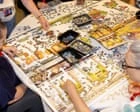
What began as a quiet pastime for many has transformed into a high-stakes national competition. At the 2026 USA Jigsaw Nationals in Atlanta, over 1,000 competitors gathered to prove their skills in an arena where jigsaw puzzles are no longer just a leisurely activity—they're a sport.
A diverse group of participants filled the convention center, from a 12-year-old prodigy from Texas to a PhD student studying color perception at UC Berkeley. The event, organized by the volunteer-run USA Jigsaw Puzzle Association in partnership with puzzle manufacturer Ravensburger, has grown exponentially since its revival in 2022, when just 300 people attended.
Thomas Kaeppler, president of Ravensburger North America, reflected on the puzzle boom during the pandemic: “We didn't have enough [puzzles], the demand was infinite.”
Social media played a crucial role in popularizing competitive puzzling. Karen Kavett, a YouTuber whose speed puzzling videos went viral, observed: “Suddenly this audience that had no idea that speed puzzling was a thing sees that it's a thing, and they tag all their friends.”
The competition atmosphere was electric with creativity. Teams wore coordinated outfits with names like “Puzzycat Dolls” and “Jigsaw Jamm,” while individuals sported puzzle-piece jewelry and accessories. Between rounds, attendees could participate in puzzle chess matches, attend educational panels, or browse vendor booths selling specialized puzzle equipment.
Mari Black, a puzzle coach from Boston competing in the event, joked with reporters: “Do you normally do stories about cults?”
Serious competitors train rigorously for these events. Hannah Doyle, the Berkeley PhD student who livestreams her puzzling sessions on Twitch, explained her evolution: “I used to practice puzzles in a very solitary way. Now I have people who are cheering me on.”
Medical student and defending champion Kelly Walter shared her strategic approach: “I used to build all over and have my puzzle in the middle and my pieces all around, and I think that slows me down.”
Despite the competitive nature, participants consistently describe the community as exceptionally supportive. Walter recalled how puzzlers supported each other during recent protests in Minnesota: “All the Minnesotans who had been dealing with a ton of turmoil in their city brought us all food so we could help participate in the protest.”
Rob Shields, host of the puzzling podcast Piece Talks, estimates that 80-90% of the community are women aged 20-60, but notes that new demographics are joining. A 12-year-old boy named Conner has become a rising star, recognized by fellow puzzlers even at the Atlanta airport.
As the competition began, a hush fell over the room. USAJPA president Aly Krasny counted down before participants tore open bags containing unreleased puzzles. The room erupted with the sound of cardboard boxes slamming on tables and pieces tumbling into piles.
Spectators watched intently, offering quiet commentary like “She's not doing the border, huh?” and suggesting pieces be sent to “puzzle jail”—the term for isolating difficult pieces that refuse to fit.
What emerges from this gathering is more than just winners and losers. It's a community that has transformed a solitary hobby into a shared passion, proving that even the most traditional pastimes can find new life in unexpected ways.