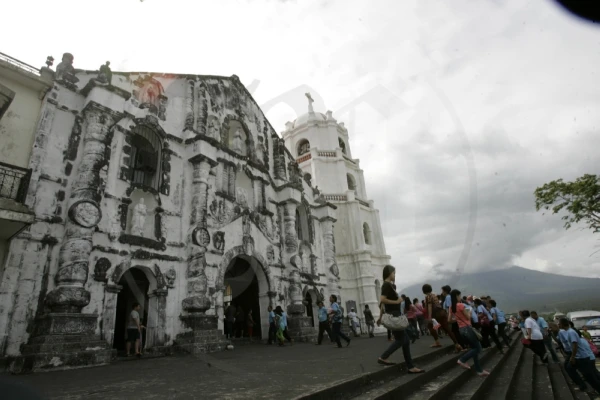
As Holy Week unfolds across the Philippines, a centuries-old tradition comes alive as families and devotees embark on the Visita Iglesia pilgrimage, visiting multiple churches in a profound expression of faith.
This deeply rooted Catholic practice traces its origins to 16th-century Rome, where St. Philip Neri initiated the pilgrimage of the Seven Churches as an act of devotion. What began as a Roman penitential exercise would eventually travel across oceans and centuries to find a permanent home in Filipino spiritual life.
During Spanish colonization, the tradition arrived in the Philippines and became centered in Intramuros, Manila's historic walled city. Pilgrims would visit seven Baroque churches within these walls, creating a natural Holy Week route that blended worship with cultural heritage.
"The devastation of Manila during World War II changed the religious landscape of Intramuros," notes historical accounts, with only Manila Cathedral and San Agustin Church surviving from the original pilgrimage sites.
Despite this transformation, Visita Iglesia not only endured but expanded beyond Manila's walls, taking root in provinces, cities, and towns across the archipelago. Today, local parish churches, chapels, and shrines have become integral to regional Holy Week routes.
The modern practice maintains both structure and flexibility. Most commonly, devotees visit seven churches on Maundy Thursday or Good Friday, though some extend their pilgrimage to fourteen churches, connecting the number to the Stations of the Cross. Pilgrims approach the tradition in diverse ways—some walk barefoot or carry crosses as acts of penance, while others travel by car with family and friends.
At its heart, Visita Iglesia represents more than mere church-hopping. It embodies the Filipino concept of "panata"—a personal vow or promise expressed through effort, endurance, and intention. Whether praying the Rosary, meditating silently on Christ's Passion, or leaving alms for the poor, each pilgrim finds their own path within the shared tradition.
The devotion has demonstrated remarkable adaptability while preserving its spiritual essence. Churches extend their hours during Holy Week to accommodate pilgrims, and contemporary variations like bicycle pilgrimages have emerged in recent years. Even during pandemic restrictions, church groups facilitated online participation, ensuring the tradition continued despite physical limitations.
Ultimately, the story of Visita Iglesia in the Philippines reflects how a global Catholic practice became uniquely Filipino—transformed by local memory, carried by generations of families, and renewed each Holy Week as both personal devotion and communal heritage.