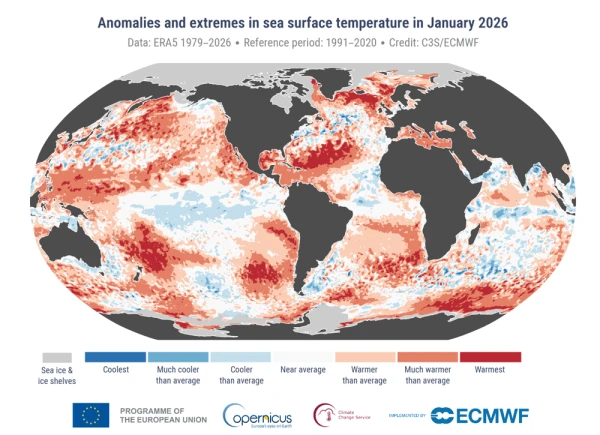
The world's oceans reached near-record high temperatures in March, according to the European Union's climate monitoring service, signaling a concerning acceleration in global warming trends.
Data from the Copernicus Climate Change Service reveals that average sea surface temperatures globally were just shy of the all-time highs recorded in previous years, continuing a pattern of sustained oceanic warming that scientists attribute primarily to human-induced climate change.
"The persistent rise in ocean temperatures represents one of the most significant indicators of our changing climate," stated a Copernicus spokesperson. "These warm waters have far-reaching consequences for weather patterns, marine ecosystems, and sea level rise."
March typically marks the transition between winter and spring in the Northern Hemisphere, but this year's elevated temperatures follow a pattern of record-breaking heat observed throughout 2023 and into early 2024. Warmer oceans contribute to more intense tropical storms, coral bleaching events, and disruptions to marine biodiversity.
Climate scientists note that oceans absorb approximately 90% of the excess heat trapped by greenhouse gases in the atmosphere, making sea temperature measurements a critical metric for tracking global warming. The data suggests that despite international climate agreements, the planet continues to warm at an alarming rate.
The findings come as world leaders prepare for upcoming climate negotiations, with environmental advocates urging more aggressive action to reduce carbon emissions and protect vulnerable coastal communities from the impacts of rising sea levels and extreme weather events.