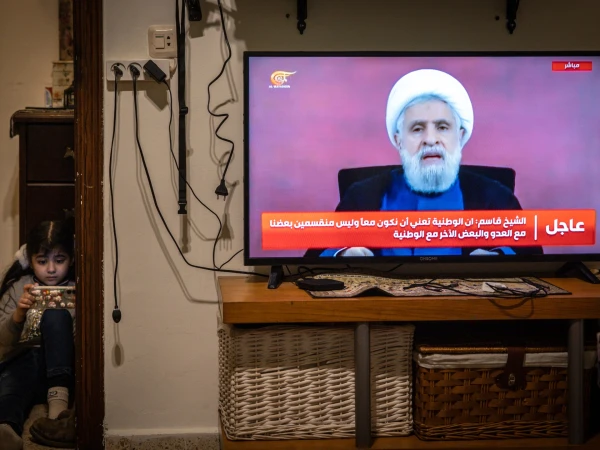
Hezbollah's deputy leader, Naim Qassem, has sharply criticized Lebanon's involvement in upcoming negotiations with Israel, labeling the talks a deliberate maneuver to force the militant group to surrender its weapons.
Qassem's remarks come as Lebanon prepares to participate in discussions scheduled in Washington, D.C., aimed at de-escalating tensions along the volatile border. Hezbollah, a powerful political and military force in Lebanon, has long maintained an armed wing that it describes as essential for defending against Israeli aggression.
In a statement, Qassem argued that the talks are not genuinely intended to address regional stability but rather serve as a strategic ploy. He urged the Lebanese government to withdraw from the negotiations entirely, asserting that participation would undermine national sovereignty and play into what he called "external agendas."
"These talks are a trap designed to pressure Hezbollah into disarming under the guise of diplomacy," Qassem said. "We will not compromise on our right to defend Lebanon."
The U.S.-mediated discussions are part of broader efforts to calm hostilities that have flared periodically between Hezbollah and Israeli forces. Lebanon's government, grappling with severe economic and political crises, has faced mounting international pressure to rein in Hezbollah's military activities.
Analysts note that Qassem's stance highlights the deep divisions within Lebanon over foreign policy and security strategy. While some factions advocate for dialogue to avert conflict, Hezbollah and its allies view any engagement with Israel as illegitimate without prior concessions.
The upcoming talks have yet to draw an official response from the Lebanese government, which remains caught between domestic political factions and international demands. The situation underscores the fragile balance of power in a region where proxy conflicts and diplomatic maneuvers often intersect.