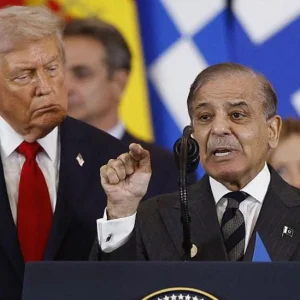
Pakistan's sudden elevation to the role of global peacemaker in the escalating US-Iran conflict has caught many off guard. Yet, a closer look at the geopolitical chessboard reveals exactly why Islamabad is uniquely positioned for the high-wire job.
A significant factor is the unexpectedly warm rapport between US President Donald Trump and Pakistan's military chief, Field Marshal Asim Munir. The American president has publicly praised Munir as his "favourite" Field Marshal, noting his deep, nuanced understanding of Iranian dynamics.
Beyond personal diplomacy, Pakistan shares a 900-kilometer border with Iran, underpinned by deep religious and cultural ties that both nations describe as a "brotherly" bond. Crucially, Pakistan currently hosts no US air bases and remains untangled from the immediate Gulf clashes, giving it a veneer of neutrality that traditional regional intermediaries lack.
However, Islamabad’s peacemaking ambitions present a stark contrast to its own neighborhood disputes. Pakistan is currently engaged in active hostilities with Afghanistan and recently navigated a tense nuclear standoff with India. When questioned about this dichotomy, Pakistani officials maintain that diplomacy only works when both sides are willing, citing years of failed talks regarding their own border security.
Behind the scenes, Pakistan is actively shuttling messages between Washington and Tehran, hosting key Muslim foreign ministers, and engaging in relentless telephone diplomacy. But this balancing act carries severe risks.
Economic and Geopolitical Stakes
The motivations for this diplomatic push are heavily economic. Michael Kugelman, a senior fellow for South Asia at the Atlantic Council, notes that outside the Middle East, Pakistan likely has the most "skin in the game." The nation is dangerously dependent on oil routed through the volatile Strait of Hormuz.
The economic squeeze is already being felt: fuel prices skyrocketed by 20% in early March, forcing the Pakistani government to implement a four-day workweek to conserve energy.
Farhan Siddiqi, a political science professor at Karachi’s Institute of Business Administration, warns that a prolonged war would inflict tremendous economic pressure on the country. Furthermore, a broader regional war poses existential threats. Last year, Pakistan inked a mutual defense pact with Saudi Arabia. If Riyadh joins the fray, Pakistan could be forced to intervene, leaving its western borders critically vulnerable while it already battles what it claims are Afghan-harbored militant groups.
Navigating Domestic Fury
Domestic politics also complicate the equation. The Pakistani public is overwhelmingly sympathetic to Iran. Following the assassination of Iran’s Supreme Leader in a joint US-Israeli strike, massive pro-Iran protests erupted across Pakistan, culminating in deadly clashes outside the US consulate in Karachi.
Former Pakistani ambassador to the US, UK, and UN, Maleeha Lodhi, emphasizes that Islamabad’s leadership is acutely aware of this fierce public sentiment.
Despite the dangers, the potential rewards for Pakistan are immense. Successfully brokering peace would instantly elevate the nation's global diplomatic standing. Lodhi describes the effort as "high-risk and high-reward," noting that even if the talks collapse, Pakistan will still be credited for making a good-faith effort against volatile odds.
Winning Over Washington
To secure its seat at the negotiating table, Pakistan aggressively courted the Trump administration with what Kugelman describes as "unconventional diplomatic games."
This included Pakistan nominating Trump for the Nobel Peace Prize for his role in defusing the 2025 India-Pakistan crisis, and allegedly facilitating the handover of the mastermind behind the Kabul airport bombing during the US withdrawal from Afghanistan.
"Pakistan gave Trump two early wins, which are very important for him. That got the relationship off the ground and brought about this new warmth," Lodhi explained.
These early diplomatic victories secured Trump’s favor, transforming Pakistan from a regional player into Washington's preferred mediator. As Siddiqi notes, Islamabad has realized that strategic "hedging" is the most effective approach to regional diplomacy—a tactic that may ultimately prove to be its greatest asset in navigating the perilous Middle East crisis.