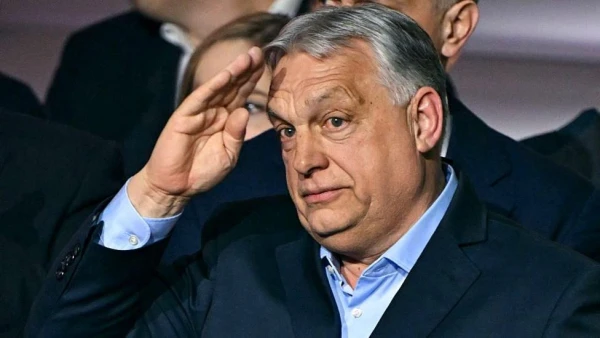
After 16 years of continuous rule, Hungarian Prime Minister Viktor Orbán has conceded defeat in a historic election that marks a dramatic shift in the country's political landscape. Opposition leader Péter Magyar secured a decisive victory on Sunday, signaling widespread public desire for change after years of what many Hungarians described as political experimentation.
Orbán's tenure, which he once characterized as an "experiment," defied easy categorization. While his American allies labeled it "national conservatism," Orbán himself operated more as a political rebel than a traditional conservative. He consistently positioned himself against mainstream European institutions, particularly what he called "Brussels bureaucrats," turning every confrontation into political advantage.
"The way he swiftly conceded defeat on Sunday night showed him with a strong eye on his image," noted observers. "He acted as a 'majoritarian' democrat, meaning that he believed that 'the winner takes all' - and that's how he acted in government."
This approach allowed Orbán to reshape Hungary's institutions after winning a two-thirds parliamentary majority in 2010. He rewrote the constitution and pushed through sweeping changes to the judicial system, electoral framework, and economic policies.
Yet contradictions marked his governance. While presenting himself as anti-globalist, Orbán actively courted foreign investment from German automakers and Asian electric vehicle battery manufacturers. He championed national sovereignty but maintained close ties with Russia despite its invasion of Ukraine. His government railed against immigration while quietly encouraging workers from Sri Lanka, the Philippines, Ukraine, and Turkey to staff new factories.
Perhaps most telling was his demographic policy. Despite pouring significant resources into encouraging larger families, Hungary's fertility rate by 2025 had returned to 1.31—the exact figure he inherited from the Socialists in 2010.
Magyar's victory emerged from a campaign that emphasized national unity rather than division. Carrying the Hungarian flag to every rally, he promised an inclusive vision that contrasted with Orbán's more exclusive nationalism.
"Hungarians felt exhausted by being constantly in conflict," analysts observed. "They disliked the way the rich got richer, the poor got poorer, and the middle classes shrank. Orbán often won his fights, but his people wanted peace and quiet."
In his victory speech to massive crowds along the Danube, Magyar struck a balance between celebration and responsibility. "Tonight we celebrate," he declared. "But tomorrow, we start work."
The election results represent more than a simple transfer of power—they mark a fundamental rejection of Orbán's political project and a desire for what many Hungarians describe as "a normal country, but one with a voice."