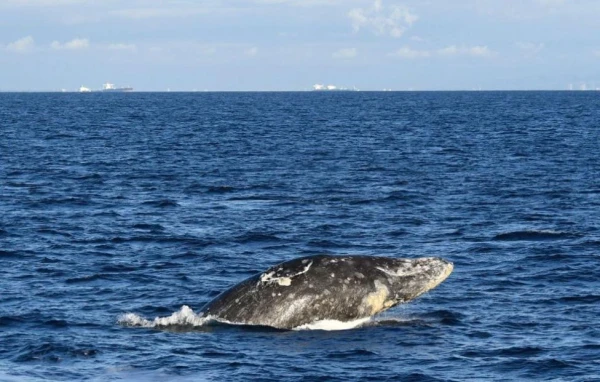
A young gray whale affectionately nicknamed "Willapa Willy" by locals has been found dead in Washington's Willapa River, after swimming an unusual 20 miles inland. The Cascadia Research Collective, a marine mammal research group, confirmed the whale's death on Saturday, following its initial sighting last Wednesday in the river's north fork, approximately 145 miles southwest of Seattle.
"We are saddened to confirm that the whale seen in the Willapa River over the past few days is deceased," the group stated in a social media update.
While the whale appeared thin but otherwise normal and uninjured when first observed, it failed to navigate back to the open ocean. Research biologist John Calambokidis of the Cascadia Research Collective suggested the whale's desperate inland journey was likely driven by hunger. Gray whales undertake extensive spring migrations north along the Pacific Coast to Arctic feeding grounds, depleting their energy reserves along the way.
"When that happens, you often see gray whales in a more desperate search for new areas to feed," Calambokidis explained. "That's the most likely context for this whale."
This incident highlights a broader crisis for the species. Gray whales in the eastern Pacific have faced reduced food availability in key Arctic feeding areas off Alaska's coast in recent years. The population continues to decline, with the most recent winter 2025 estimate from NOAA Fisheries showing approximately 13,000 individuals—the lowest count since the 1970s.
The challenges are multifaceted. Beyond nutritional stress, gray whales—which can grow to about 15 meters (49 feet) long and weigh up to 40,000 kg (90,000 pounds)—face threats from vessel strikes and entanglement in fishing gear during their long, often solitary migrations. Earlier in April, two malnourished adult gray whales washed up dead in the nearby Ocean Shores area, one with injuries consistent with a ship strike.
Researchers are now assessing the location to conduct a necropsy on "Willapa Willy," hoping to learn more about the pressures facing these majestic marine travelers.