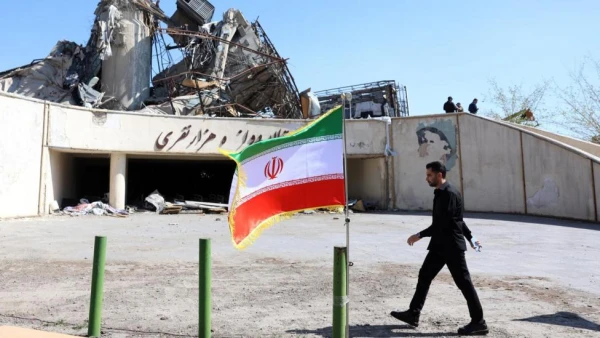
As a critical deadline approaches, Iranian citizens are preparing for potential attacks on their country's vital infrastructure following a stark warning from former U.S. President Donald Trump.
Trump declared in a social media post that Tuesday would mark "Power Plant Day, and Bridge Day, all wrapped up in one, in Iran," setting a deadline of 20:00 ET for Iran to open the Strait of Hormuz. Iranian officials have dismissed the threat, with a presidential aide calling Trump's statements "insults and nonsense" born of "sheer desperation and anger."
Despite an internet blackout imposed by authorities over five weeks ago, the BBC has spoken with several Iranians who oppose the current government. Their identities have been protected for safety.
"It feels like we're sinking deeper into a swamp," said Kasra, a Tehran resident in his 20s. "What can we do as ordinary people? I keep imagining a scenario where, in a month, I'm sitting with my family with no water, no electricity, nothing."
While state television broadcasts images of well-stocked stores, many Iranians are reportedly stockpiling supplies and worrying about disruptions to water and power services.
"My mum is filling every bottle she can find in the house with water," said Mina, another Tehran resident in her 20s. "I think more and more in Iran have realized that Trump doesn't care about them at all."
The situation has created complex reactions among Iranians who initially welcomed U.S.-Israeli strikes against government targets but now view attacks on civilian infrastructure as crossing a dangerous line.
"I've thanked Israel and the U.S. for almost all of what they've hit so far," said Arman from Karaj, where a bridge under construction was recently bombed. "But hitting a power station just paralyzes the country. It just plays into the Islamic Republic's hands."
Radin, a Tehran resident in his 20s, expressed a different perspective: "If attacking targets in the country brings down the Islamic Republic, I'm fine with that. Because if the Islamic Republic survives this war, it will stay forever."
The conflict's economic impact is already being felt across Iran. Bahman, a building superintendent engineer in Tehran, reported that construction has halted entirely, while Jamshid, a restaurant owner, said his business has declined dramatically.
"I estimate that I can hold this up for a month, maybe two, at most," Jamshid said. "The rent is breaking my back."
Internet access has become both scarce and expensive, with some Iranians paying approximately $6 for 1GB of data through black market channels. Using or possessing Starlink satellite systems carries a potential two-year prison sentence, though some continue to risk it for connectivity.
The psychological toll is mounting among citizens facing uncertainty about their basic needs and future.
"I feel like I'm losing my mind," said Marjan, a Tehran resident in her 20s. "What's the point if Trump hits energy infrastructure? I'm distressed. My parents too... they argue over the smallest things now."
As the deadline approaches, ordinary Iranians find themselves caught between a government they oppose and external threats that could devastate their daily lives, creating what many describe as an increasingly desperate situation with no clear resolution in sight.