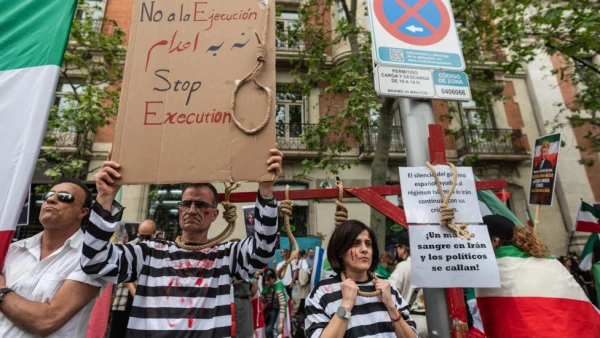
Iran executed at least 1,639 people in the past year, marking the highest number recorded in the country since 1989, according to a joint report by two human rights organizations.
This figure represents a staggering 68% increase compared to the previous year's total of 975 executions. The report, compiled by Norway-based Iran Human Rights (IHR) and Paris-based Together Against the Death Penalty (EPCM), reveals an average of four executions per day throughout the year.
"If the Islamic Republic survives the current crisis, there is a serious risk that executions will be used even more extensively as a tool of oppression and repression," the NGOs warned in their assessment.
The majority of those executed were convicted of drug-related offenses (795 cases, a 58% increase) or murder (747 cases, a 79% increase). At least 57 individuals faced execution for security-related charges, including two protesters. Six people were executed for membership in the exiled opposition group Mujahideen-e Khalq (MEK), while another was convicted of spying for Israel.
Notably, at least 48 women were executed—a 55% increase and the highest number recorded in over two decades. Ethnic minorities and other marginalized groups were disproportionately represented among those put to death.
More than half of the executions followed sentences handed down by Revolutionary Courts after what the organizations describe as "grossly unfair trials and without due process."
Since the start of the conflict on February 28, seven people have been executed in connection with recent protests. At least 16 individuals sentenced to death during the 2022 "Woman, Life, Freedom" protests remain at risk, while 27 others have received death sentences related to protests earlier this year. Hundreds more face charges that could carry the death penalty.
Raphaël Chenuil-Hazan, executive director of ECPM, emphasized that abolishing the death penalty should be "at the heart" of any negotiations between the U.S. and Iran to end their ongoing conflict.
IHR director Mahmood Amiry-Moghaddam noted the absence of human rights discussions in recent peace talks, stating that a moratorium on executions and the release of political prisoners should be "demand number one."
Iran has long maintained its position as the world's second most prolific executioner after China, where exact execution numbers remain state secrets but are believed by activists to reach into the thousands annually.