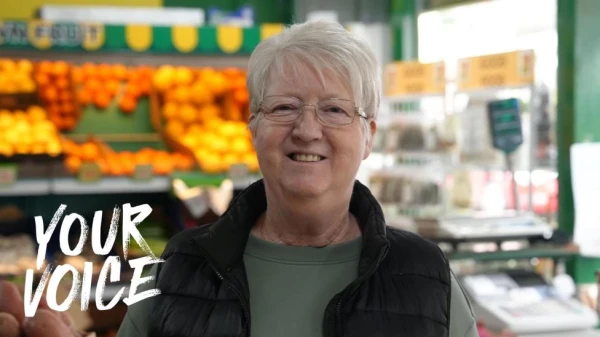
In the Welsh town of Maesteg, nestled within one of the country's most economically challenged regions, residents are navigating the ongoing cost-of-living crisis by altering their daily spending habits. With the Senedd election approaching, conversations on the bustling high street reveal that rising grocery and energy prices are top concerns, prompting significant shifts in consumer behavior.
Hayley Morgan, owner of Go Bananas greengrocers, observes that customers have become more financially cautious. "Shoppers are increasingly savvy," she notes. "They often purchase just two or three items at a time, hunting for bargains and opting for loose produce—like a single apple or banana—instead of pre-packaged bundles to minimize waste." Morgan has also seen her own costs for items such as tomatoes and peppers gradually increase, attributing this to broader economic pressures like rising oil prices.
At the local butcher shop, Andrew Garner reports similar trends. "I'm selling a lot more sausages," he says, adding that business peaks toward the end of the month when paychecks arrive. He also notes a resurgence in cash payments, suggesting that customers are more mindful of their budgets. "When people use cash, they're watching every penny—once it's gone, it's gone, unlike with card taps." Garner plans to vote in the upcoming election but remains skeptical about political solutions, quipping, "Can it be any worse?"
Despite the financial strain, not all spending has dwindled. Michael Newth, who has run KMP Jewellers for five decades, says that while smaller purchases have declined, higher-value items like gold are gaining popularity as investments. "You only need to look at the new cars on the road to see that people still buy expensive things," he remarks. At 77, Newth resists retirement, cherishing the community spirit in Maesteg. "If locals were down to their last pound, they'd lend you 50p. It's not about the money; it's about the camaraderie."
New businesses are also finding footholds amid the economic challenges. Joanne Bruford and her daughter Charlie recently opened Delicious, a pasta and salad takeaway that has seen queues out the door since its launch. "We've been a sell-out every day," Joanne shares, acknowledging the risk of starting during a crisis but expressing optimism. "We're trying to keep costs down, but prices for peppers and tomatoes have jumped this week." She adds that she "lives in hope" for positive change post-election.
For some residents, like Julie Evans, who cares for her husband with dementia and her autistic grandson, budgeting has become a necessity. "I'm cutting back on heating and planning meals a week in advance to afford what they need," she explains, highlighting the personal toll of rising costs. Retired catering business owner Barbara Farmer voices widespread skepticism toward politicians, stating, "They've got good intentions, but they don't seem to carry it out."
As Maesteg adapts to these economic pressures, the high street reflects a blend of resilience and caution, with community bonds and entrepreneurial spirit offering glimmers of hope amidst the financial uncertainties.