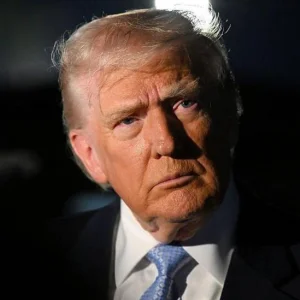
President Donald Trump’s history of clashing with Washington’s NATO partners has resurfaced, this time over demands for European military intervention in the increasingly volatile conflict with Iran.
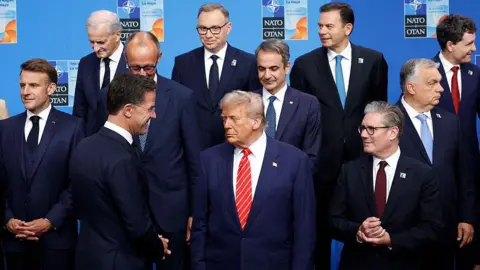
Trump recently claimed that failing to secure the heavily blockaded Strait of Hormuz would spell severe consequences for NATO's future. However, his remarks have drawn sharp rebukes from European officials who view the alliance's foundational mandate quite differently.
"Nato was created as a… defensive alliance," Gen. Sir Nick Carter, the former head of the UK’s Defence Staff, told the BBC. "It was not an alliance that was designed for one of the allies to go on a war of choice and then oblige everybody else to follow. I'm not sure that's the sort of Nato that any of us wanted to belong to."
The pushback from European capitals has been remarkably candid. German Defense Minister Boris Pistorius flatly rejected the notion that the conflict falls under NATO's purview, questioning what a few European frigates could accomplish that the massive American naval fleet cannot. "This is not our war," Pistorius declared. "We have not started it."
Despite the political friction, the economic fallout from the crippled Gulf shipping route remains a pressing global emergency. Iran has effectively strangled the vital Strait of Hormuz, permitting only a select few ships bound for friendly nations like China and India to pass. Western powers are scrambling to mitigate the economic shockwaves stemming from a crisis largely ignited by the US administration.
Finding a rapid resolution, however, appears highly unlikely. Following ongoing consultations with American, European, and Gulf state leaders, British Prime Minister Sir Keir Starmer confirmed that while discussions for a "viable plan" are active, definitive actions have yet to be decided.
Starmer pointed to the deployment of autonomous mine-hunting technologies to the region as a potential stopgap. With the Royal Navy's HMS Middleton undergoing extensive maintenance in Portsmouth, the UK is currently without a dedicated mine-clearing vessel in the area for the first time in decades. Instead, British forces will rely on newly engineered maritime drones to safely locate and neutralize submerged threats.
The broader issue facing the US and its allies is a systemic global underinvestment in minesweeping operations. According to former Royal Navy commander Tom Sharpe, relying on unproven autonomous systems is a gamble. "We're probably going to find out in the next few weeks whether or not it works," Sharpe noted to the BBC.
Gen. Carter echoed these concerns, pointing out that the last major Western naval de-mining effort occurred during the 1991 Gulf War off the coast of Kuwait, taking nearly two months to complete. He observed that modern navies, particularly the American fleet, have failed to adequately fund these critical capabilities. The US Navy is actively retiring its specialized wooden-hulled Avenger-class minesweepers in favor of Independence-class littoral combat ships equipped with unmanned tech.
Beyond underwater explosives, coalition forces must contend with Iran's Revolutionary Guard Corps. Tehran possesses a formidable arsenal of shore-to-ship missiles, weaponized suicide drones, and high-speed attack craft. Recent footage circulated by Iranian state media showcased these assets stockpiled in fortified underground bunkers, indicating long-term preparation for a maritime standoff.
Trump recently brushed off the challenge of reopening the strait as a "very small endeavour," suggesting the US might directly bombard Iranian coastal defenses to neutralize hostile actors. While American forces have previously struck Iranian mine-laying vessels docked in port, European allies are deeply hesitant to escalate the conflict or commit ground forces.
Instead, nations like the UK are advocating for diplomatic de-escalation to unblock the waterway. However, with Israeli and American officials signaling a protracted military campaign lasting several more weeks, diplomacy remains stalled.
The prospect of deploying allied warships to escort commercial freighters remains equally murky. Germany has firmly ruled out military participation in the strait. Similarly, EU foreign policy chief Kaja Kallas confirmed that European foreign ministers declined to expand existing Red Sea naval missions, echoing the sentiment that the broader conflict is "not Europe's war." The EU's current Operation Aspides, tasked with countering Houthi rebel attacks, operates with a meager fleet of three vessels.
Meanwhile, German Foreign Minister Johann Wadephul stressed that Berlin expects clear military timelines from Washington and Israel before considering new security pacts. In France, President Emmanuel Macron expressed interest in forging an international escort coalition, but Defense Minister Catherine Vautrin quickly clarified that Paris has no immediate plans to dispatch ships until the most intense combat phases conclude.
As Sharpe warns, any future escort operation in the Strait of Hormuz would be vastly more perilous than current Red Sea patrols, requiring forces to navigate simultaneous, complex threats from the air, the surface, and beneath the waves.