The UK government is set to overhaul the way police in England and Wales handle non-crime hate incidents (NCHIs), aiming to put an end to the policing of "everyday arguments" and online spats.
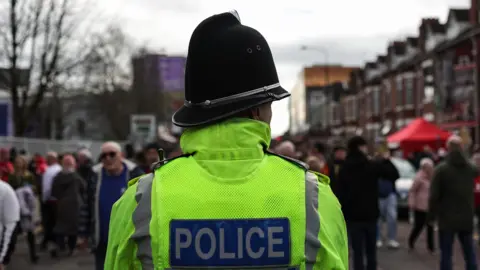
Under upcoming Home Office guidance, law enforcement will be instructed to log only those incidents that hold genuine relevance to policing—such as preventing crime or protecting vulnerable communities.
The shift follows a comprehensive review by police chiefs and the College of Policing, which concluded that the existing framework, rooted in the mid-2000s, has increasingly entangled officers in moderating social media disputes rather than fighting crime.
What Are Non-Crime Hate Incidents?
NCHIs are officially recorded when someone reports an incident they perceive as motivated by prejudice—such as racism or sexism—but the act itself falls short of breaking hate crime laws. While these logs do not amount to criminal records, they remain on police databases and can occasionally surface during enhanced background checks for employment.
The practice of logging these incidents stems from 2005 guidelines introduced in the wake of the inquiry into the racially motivated murder of Stephen Lawrence. Initially designed as an intelligence-gathering tool to prevent escalating violence, modern usage has drifted significantly.
The Social Media Surge
The recent police review highlights a stark departure from the original intent, noting that officers have been frequently dragged into "policing the online space." Between 2022 and 2025, forces recorded roughly 30,000 NCHIs, with noticeable surges coinciding with highly charged global events, such as the October 7 Hamas attacks in Israel.
To combat this mission creep, the review recommends implementing a new "triage system." This would empower call handlers to better evaluate whether a report actually merits a database entry. The strategy also includes specialized officer training, an AI tool to help navigate complex legislation, and a reassessment of how NCHIs are disclosed during enhanced Disclosure and Barring Service (DBS) checks.
Political Pushback
The Home Office has embraced all of the review's recommendations, emphasizing a pivot away from refereeing trivial disputes. Home Secretary Shabana Mahmood stated that the sweeping changes will ensure officers are "no longer policing perfectly legal tweets," freeing them up to patrol neighborhoods and apprehend actual criminals.
Full rollout of the new system is slated for early 2027. However, the Conservative opposition has dismissed the Labour government's approach as a superficial fix.
Shadow Home Secretary Chris Philp criticized the changes as "simply a rebrand of non-crime hate incidents with a more restrictive triage process," arguing that police time will still be wasted on non-criminal monitoring. The previous Conservative government had introduced its own restrictive guidance in 2023—rules that Labour is currently dismantling, claiming they lacked necessary clarity.
Under party leader Kemi Badenoch, the Conservatives maintain a stricter stance, arguing that NCHIs should only be recorded if authorized by senior officers who deem the information vital for criminal investigations.