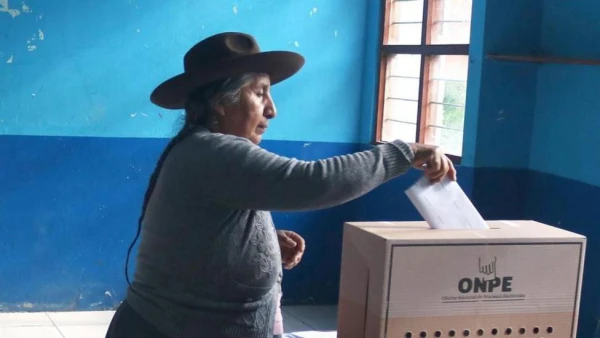
Peru's general election has stretched into a second day after widespread logistical failures prevented tens of thousands of citizens from casting their votes on Sunday. Electoral authorities have granted a one-day extension to over 50,000 affected voters in Lima and at international polling stations, including locations in Orlando, Florida, and Paterson, New Jersey.
President José María Balcázar attributed the disruption to a contracted company's failure to deliver voting materials on time. With voting mandatory for Peruvians aged 18 to 70—and fines imposed on those who abstain—the delay has intensified scrutiny on an already turbulent political landscape.
Early results from half the counted ballots show conservative candidate Keiko Fujimori narrowly leading Rafael López Aliaga, the right-wing former mayor of Lima. However, no candidate has approached the 50% threshold required for an outright victory, making a June 7 runoff between the top two contenders all but certain.
"The enemy is the left," Fujimori declared as votes were tallied, signaling her strategy to block left-wing rivals from advancing. Both she and López Aliaga have pledged an "iron fist" approach to combat rising crime, particularly extortion targeting public transport workers.
This election marks a pivotal moment for a nation weary of political instability. The winner will succeed the 83-year-old Balcázar, who assumed office in February, and must navigate a fractured Congress and a public deeply distrustful of politicians. The newly reinstated Senate, with 60 members who cannot be dissolved by the president, is expected to play a crucial role in governance.
Fujimori, running for the fourth time, carries the legacy of her father, autocratic former leader Alberto Fujimori—a figure both revered and reviled. Her visit to his grave on election day underscored this enduring allegiance, which polarizes the electorate.
With 35 presidential candidates and exit polls indicating the race remains wide open, analysts suggest left-wing contenders like ex-tourism minister Roberto Sánchez could still secure a spot in the runoff. The outcome will shape Peru's efforts to address corruption, crime, and the trust deficit that has seen six presidents ousted or resign in the past decade.