MANILA — The Philippines' ambition to achieve its first-ever 'A' credit rating has been set back after S&P Global Ratings revised the country's sovereign outlook from 'positive' to 'stable,' citing economic vulnerabilities exposed by the ongoing Middle East conflict.
In a report released Thursday, the credit rating agency affirmed the Philippines' 'BBB+' investment-grade rating—just one step below the coveted 'A' category—but downgraded its outlook, signaling that an upgrade is unlikely over the next one to two years.
S&P attributed the revision to heightened risks from the energy shock triggered by the war, which is expected to widen the Philippines' current account deficit to 4% of GDP this year, up from 3.3% in 2025. The agency also noted that spillover effects from a recent flood control corruption scandal have compounded economic pressures.
"We revised the rating outlook on the Philippines to stable from positive because the war in the Middle East has increased risks for the trajectory of the country's external and fiscal metrics," S&P stated in its assessment.
The Philippines faces particular vulnerability as it imports 98% of its oil from the conflict-affected region. In response, the government has implemented measures to cushion the impact, including allocating approximately ₱238 billion from the 2026 national budget and ordering a 20% reduction in nonessential government spending.
Despite these near-term challenges, S&P maintained a positive long-term view, projecting economic growth to rebound to 5.8% in 2026 after a sluggish 4.4% expansion in 2025.
"The stable outlook reflects our expectation that the Philippines will maintain healthy economic growth and that its fiscal deficit will gradually decline over the next two years," the agency noted.
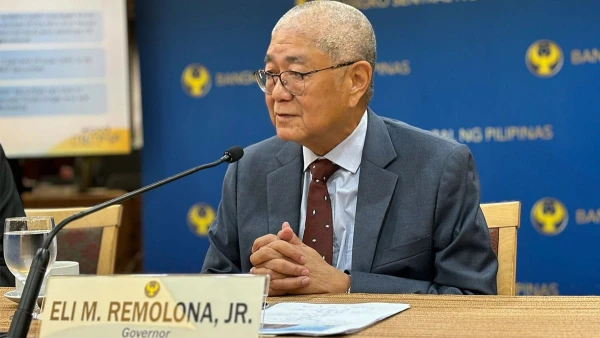
Bangko Sentral ng Pilipinas Governor Eli M. Remolona, Jr. welcomed the affirmation of the country's sovereign rating, stating that the central bank "will continue to monitor local and overseas data to effect policies aimed at safeguarding price and financial stability amid a challenging economic and geopolitical landscape."
S&P suggested that the government may need to absorb a higher deficit as it expands support measures, including targeted subsidies and potential adjustments to fuel taxes. However, the agency expressed confidence that the impact of energy shocks and governance issues would diminish by the second half of the year, allowing for gradual improvement in the country's economic metrics.