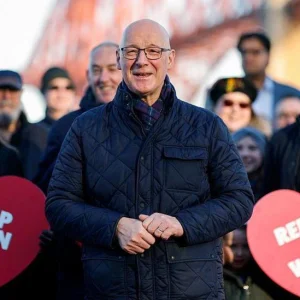

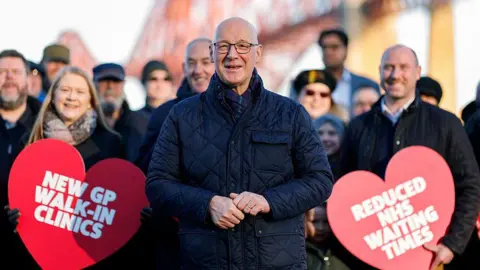
As the Scottish Parliament pauses ahead of May's highly anticipated elections, political factions are gearing up for six weeks of intense campaigning. At the heart of the debate is the Scottish National Party (SNP) and its governance track record, which First Minister John Swinney is fiercely defending against opposition attacks.
A clear way to evaluate the government's performance is to revisit the SNP's 2021 election manifesto. Judging the party by its own benchmarks reveals a mixed reality of fulfilled promises, delayed initiatives, and quietly abandoned policies.
The political landscape in Scotland has shifted dramatically over the past few years, witnessing three different First Ministers—Nicola Sturgeon, Humza Yousaf, and now Swinney—as well as the rise and eventual collapse of a power-sharing agreement with the Scottish Greens.
Despite the turbulence, the party's commitment to the National Health Service remains a central pillar. The 2021 pledge to boost frontline health spending by 20% (or at least £2.5 billion) was comfortably surpassed, with actual funding surging by 28%, equating to nearly £5 billion. Similarly, a promise to raise average NHS staff pay by 4% was achieved, largely propelled by inflation forcing larger-than-expected public sector wage settlements.
However, the broader health and social care sector hasn't experienced the same success. The ambitious National Care Service—pitched as a revolutionary system to eliminate the "postcode lottery" of social care—has effectively crumbled. A lack of concrete financial planning alienated opposition lawmakers, local councils, and labor unions, leading to the project's slow demise.
On the economic front, the SNP vowed to freeze income tax rates and brackets. This promise went unfulfilled. Instead, higher and top tax rates were bumped up by a penny in 2023. By 2024, a brand-new "advanced rate" was introduced, alongside another 1p hike to the top tier.
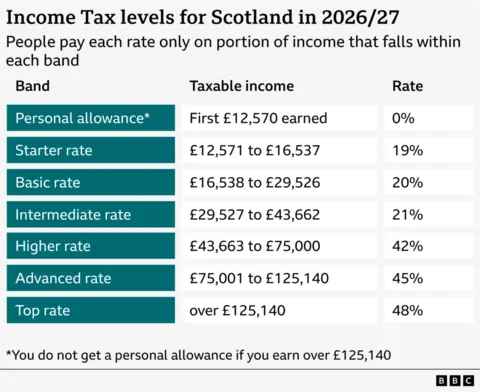
Government officials pointed to the economic fallout from the war in Ukraine and the subsequent cost-of-living crisis as justifications for these tax hikes. Swinney has argued the manifesto included a vital caveat granting the government "flexibility" during changing circumstances.
The same global energy crisis was blamed for the scrapping of an environmental pledge to decarbonize heating in one million homes by 2030, a target officials eventually deemed unattainable.
Education, a heavily scrutinized devolved power, also saw significant hurdles. A flagship promise to hire 3,500 additional teachers and classroom assistants hit a wall because local councils are the actual employers of educational staff. Following threats to slash council funding and a slight drop in overall teacher numbers, the Scottish Government adjusted its goal to merely restoring the headcount to 2023 levels.
Another education commitment—giving teachers more preparation time by reducing classroom hours—pushed the EIS union to the brink of a strike. A last-minute deal averted the walkout earlier this month, though fulfilling this promise will require hiring more staff, backed by a £40 million recruitment fund set for next year.
Meanwhile, the SNP committed £1 billion to eliminate the educational "attainment gap" between wealthy and disadvantaged students. While the promised £200 million annual funding has been dispersed, the gap remains stubbornly entrenched, with recent data showing it is wider now than before the Covid-19 pandemic.
Tackling child poverty remains a major focus for Swinney, who inherited several established initiatives. The standout success is the Scottish Child Payment. The party originally aimed to double the weekly family benefit to £20; after multiple increases, it is now on track to reach £28.20.
Yet other family-focused policies have been diluted or postponed. The guarantee of free school meals for all primary students is now restricted to children in Primary 1 through 5, with older students receiving means-tested support. Furthermore, a nationwide rollout of "wraparound" before- and after-school childcare, specifically breakfast clubs, has been pushed back to August 2027.
Some long-term manifesto pledges are still in progress, making them difficult to judge today. For instance, the SNP promised to build 100,000 affordable homes by 2032—a target they quickly raised to 110,000 post-election. Recent data tracking progress up to September 2025 indicates that just over 31,000 homes have been completed across social rent, affordable rent, and private ownership categories.