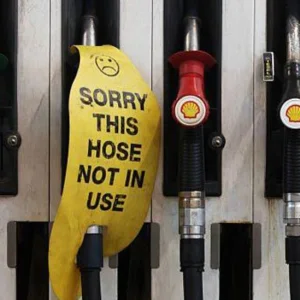
Prime Minister Anthony Albanese is urging Australians to remain calm as panic buying leaves hundreds of petrol stations across the country completely dry. Despite soaring pump prices triggered by the ongoing conflict involving Iran, the government insists the nation's fuel reserves remain entirely secure.
Addressing the media on Friday, Albanese acknowledged the financial strain the geopolitical crisis is placing on citizens but emphasized that the current shortages at the pump are a result of sudden hoarding rather than an actual drop in national supply.
"The longer this war goes on, the greater the impact will be. But we continue to act to prepare and shield Australians from the worst of it," Albanese stated.
Energy Minister Chris Bowen echoed this sentiment alongside the Prime Minister, confirming that Australia's inventory of petrol and diesel over the coming weeks will actually meet or exceed normal levels.
The rush at the pumps follows dramatic price hikes after the closure of the Strait of Hormuz amid escalating military actions involving the US, Israel, and Iran. The Australian Institute of Petroleum reports that the average retail price for unleaded fuel has skyrocketed to 238 Australian cents per liter—up from 171 cents just four weeks prior. Meanwhile, diesel prices in Sydney shattered previous records on Thursday, peaking at an unprecedented 314.5 cents per liter.
This massive surge has fundamentally altered consumer behavior. According to Peter Khoury, a spokesperson for the National Roads and Motorists' Association (NRMA), the primary driver behind the empty pumps is panicked stockpiling. Motorists are filling up jerry cans to store in their garages, and commercial transport fleets are instructing drivers to top up whenever they spot available diesel, even if their tanks are already half full.
The sudden spike in demand has disproportionately impacted independent fuel retailers. Unlike major chains, smaller garages typically operate without long-term purchasing contracts, putting them at the back of the line when oil companies prioritize deliveries. In New South Wales alone, approximately one in seven retailers is completely out of at least one type of fuel, leaving some motorists and truck drivers stranded.
To tackle the escalating logistical crisis, Albanese is scheduled to convene an emergency national cabinet meeting on Monday. While the government has firmly dismissed the idea of fuel rationing, it has actively moved to alleviate the pressure by tapping into the national oil stockpile and temporarily easing fuel standards.
Complicating matters further, global energy markets are facing additional strain after a severe cyclone in Western Australia forced temporary outages at the Gorgon and Wheatstone LNG facilities, which collectively supply roughly 5% of the world's liquefied natural gas.