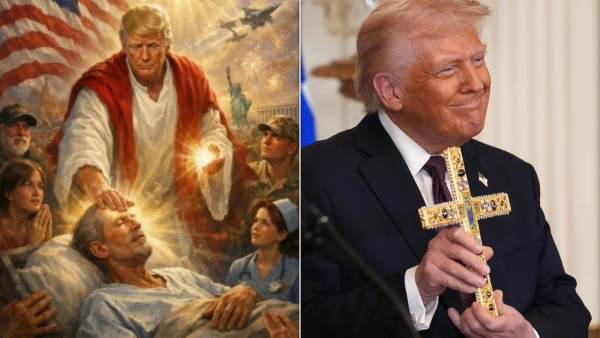
Faith leaders from diverse religious backgrounds have united in condemnation after an AI-generated image depicting former President Donald Trump as a Christ-like figure circulated online before being removed. The controversial digital artwork, which portrayed Trump in a manner reminiscent of traditional religious iconography, sparked immediate backlash from clergy and religious organizations who called it blasphemous and inappropriate.
"This digital manipulation crosses a sacred boundary," stated Reverend Michael Chen of the National Council of Churches. "Using artificial intelligence to create religious imagery for political purposes demonstrates a profound disrespect for both faith traditions and the democratic process."
The image, which appeared briefly on social media platforms before being taken down, showed Trump with features and composition commonly associated with depictions of Jesus Christ in Western art. Religious leaders emphasized that the incident reflects broader concerns about the misuse of emerging technologies.
"When technology is weaponized to create false sacred imagery, it undermines the very foundations of religious reverence," said Rabbi Sarah Goldstein, speaking on behalf of several interfaith coalitions. "This isn't about politics—it's about preserving the sanctity of religious symbols in an increasingly digital world."
Muslim, Christian, Jewish, and Buddhist representatives have all issued statements expressing concern about the implications of such AI-generated content. Many noted that while political figures have historically been depicted in various artistic styles, the specific use of messianic imagery represents a new and troubling development in political communication.
The controversy has reignited discussions about ethical guidelines for AI-generated content, particularly when it involves religious or sacred imagery. Several religious organizations are now calling for clearer policies from social media platforms regarding the creation and distribution of such content.