The UK Ministry of Defence has revealed that three Russian submarines conducted a covert surveillance operation over vital undersea cables and pipelines in waters north of the United Kingdom. Defence Secretary John Healey announced that British warships and aircraft were deployed to monitor and deter what he described as "malign" Russian activity.
"We see you. We see your activity over our cables and our pipelines, and you should know that any attempt to damage them will not be tolerated and will have serious consequences," Healey stated, directly addressing Russian President Vladimir Putin during a Downing Street press conference.
According to the Defence Secretary, Russia deployed an Akula-class attack submarine as a diversionary tactic while two specialized GUGI spy submarines carried out surveillance on critical infrastructure. The attack submarine reportedly left UK waters after being monitored, while the two surveillance vessels remained in the area.
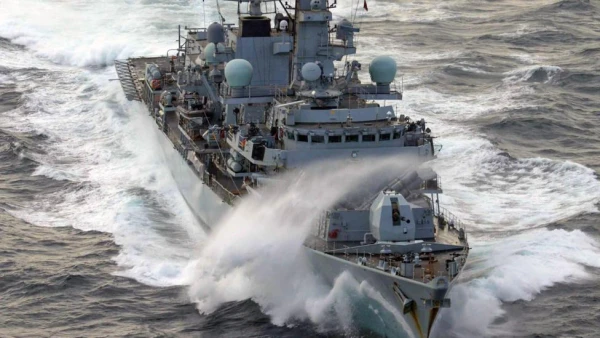
The Royal Navy deployed frigate HMS St Albans, fuel tanker RFA Tidespring, and anti-submarine Merlin helicopters to track all three Russian submarines. Healey emphasized that allied nations, including Norway, participated in monitoring the operation.
"Our armed forces left Russia in no doubt that they were being monitored, that their movements were not covert, as President Putin planned, and that their attempted secret operation had been exposed," Healey declared. "We watched them, we were able to track them, we dropped sonar buoys to demonstrate to them that we were monitoring every hour of their operation."
Russia has denied the allegations through its embassy in London, with Moscow's state news agency Tass reporting that Russia "is not threatening underwater infrastructure, which is truly critical to the UK."
The GUGI Threat
The GUGI unit (Main Directorate for Deep Sea Research) represents a formidable challenge to Western nations. Operating as part of the Russian navy but reporting directly to the defense minister and president, this secretive organization specializes in underwater surveillance, sabotage, and reconnaissance.
GUGI possesses unique capabilities, including miniature uncrewed submarines that can be launched covertly from spy vessels. These "mini-subs" have the ability to cut cables or potentially intercept data passing through them, representing what security experts describe as "hybrid warfare"—hostile acts that stop short of attributable lethal attacks.
Britain and NATO are concerned that Russian surveillance of Western undersea infrastructure aims to give Moscow a strategic advantage should hostilities ever break out. Security analysts warn that Russia could attempt to disrupt Britain's data networks by activating devices pre-positioned during surveillance operations.
Critical Infrastructure at Risk
The UK depends heavily on its undersea infrastructure, with approximately 60 cables coming ashore at multiple points along the coastline, particularly around East Anglia and South West England. More than 90% of the UK's daily internet traffic travels through these undersea cables.
Globally, over 600 undersea cables spanning 870,000 miles connect continents, carrying electricity and information across oceans. These cables represent a critical piece of worldwide infrastructure that remains vulnerable to underwater operations.
Prime Minister Sir Keir Starmer emphasized the government's determination to protect British citizens from the consequences of Russian aggression, stating the UK would not "shy away from taking action and exposing Russia's destabilising activity that seeks to test our resolve."
Healey suggested that Putin had attempted to capitalize on global distraction caused by conflicts in the Middle East, asserting that Russia remains the "primary threat to UK security." While expressing confidence in the UK's ability to track and monitor future Russian activity, the Defence Secretary acknowledged the ongoing threat Moscow poses to national security.