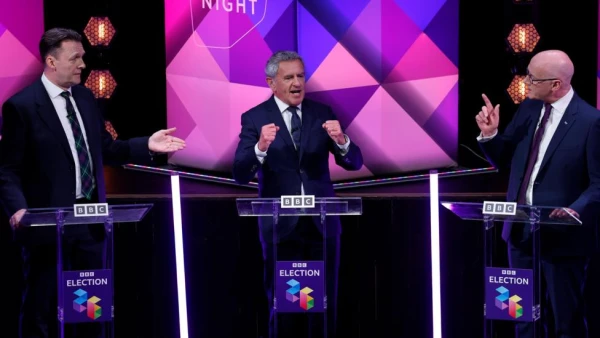
Scotland could see a second independence referendum as early as 2028, according to First Minister John Swinney. The Scottish National Party leader made the statement during a televised leaders' debate, setting a potential timeline for the nation's constitutional future.
"It is perfectly conceivable to have a second referendum by 2028," Swinney told the audience at Paisley Town Hall, arguing that an SNP majority would break the current "constitutional logjam" and allow Scotland to determine its own destiny.
The debate revealed sharp divisions among party leaders on the independence question. Green co-leader Ross Greer supported Swinney's position, stating that a majority of pro-independence MSPs would constitute a democratic mandate for another vote.
"It is profoundly anti-democratic for Westminster to deny Scotland a second vote," Greer asserted, suggesting independence could help address challenges facing the NHS and the economy.
Opposition leaders pushed back strongly. Labour's Anas Sarwar insisted the upcoming election "is not about independence" but about improving public services, while Conservative Russell Findlay warned that breaking up the United Kingdom would be an "unmitigated disaster."
Reform UK's Malcolm Offord called another referendum "divisive" but acknowledged circumstances could change if support for independence reached 60%. Liberal Democrat leader Alex Cole-Hamilton said he hadn't "given a second referendum a moment's thought" due to more pressing concerns.
The debate also touched on immigration, with leaders clashing over whether Scotland needs more newcomers to support public services and the economy. Greer argued immigrants are essential for the NHS and rural communities, while Offord expressed concerns about pressure on local services.
Legal hurdles remain significant. The UK Supreme Court ruled in 2022 that Scotland cannot hold an independence referendum without Westminster's approval through a Section 30 order—the same mechanism used before the 2014 vote. Prime Minister Keir Starmer has previously stated he cannot imagine another referendum occurring during his potential tenure.
Despite these obstacles, Swinney urged voters to deliver an "emphatic mandate" for the SNP, suggesting the constitutional question will remain central to Scottish politics regardless of July's election outcome.