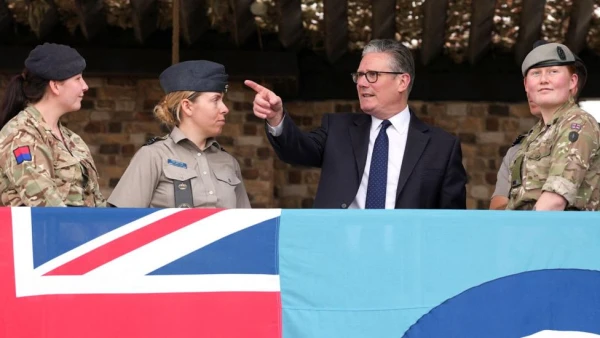
Prime Minister Keir Starmer has issued a stark warning that Britain must build greater resilience to navigate a "volatile and dangerous" world, declaring that recent international shocks should serve as a "line in the sand" for national policy.
In a Guardian article and during an ITV podcast interview, Starmer argued that the UK has been "buffeted by crises for nearly two decades" and can no longer afford to be "at the mercy of events abroad." He specifically referenced the ongoing conflict in Iran and its ripple effects on global stability.
"I'm fed up with the fact that families across the country see their bills go up and down on energy, businesses' bills go up and down on energy because of the actions of Putin or Trump," Starmer told the Talking Politics podcast.
His comments come during a three-day diplomatic tour of Gulf states, where he has met with leaders including Saudi Crown Prince Mohammed bin Salman. The trip coincides with heightened tensions in the Middle East, where a fragile ceasefire in the Iranian conflict is showing strain.
Starmer emphasized that resilience requires concrete policy shifts, pointing to investments in renewable energy, strengthened workers' rights, and social security reforms as key components. "Because resilience is what gives us control," he wrote. "Without it, we are constantly pushed off course by events beyond our borders."
Foreign Secretary Yvette Cooper echoed this sentiment in a London speech, noting that international crises are becoming increasingly frequent. "Instability and volatility are becoming increasingly chronic and turbulence is the new normal," she stated.
Political opponents offered mixed reactions. Conservative Chairman Kevin Hollinrake criticized Starmer's energy policies, asking: "Why is he banning North Sea drilling and ducking welfare reform?" Meanwhile, Liberal Democrat spokesperson Calum Miller urged stronger European alliances, while Green Party leader Zack Polanski called for more decisive action on fossil fuel dependence.
The closure of the Strait of Hormuz due to regional conflict has already impacted UK consumers, driving up petrol and food prices—a tangible example of how distant events affect British households. Starmer's message is clear: in an interconnected world, domestic preparedness is no longer optional but essential for national sovereignty and economic stability.