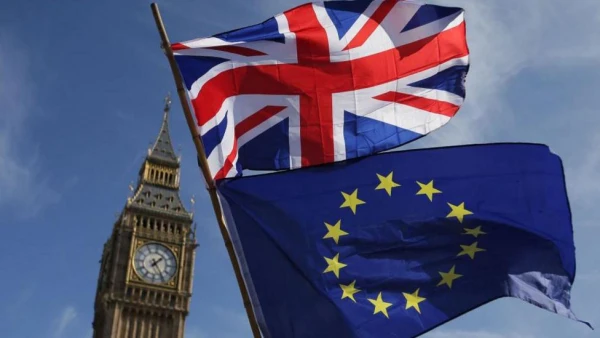
Prime Minister Keir Starmer is actively pursuing closer ties with the European Union, marking a significant shift in his political strategy as he navigates the complex legacy of Brexit. The government's plan involves aligning UK regulations with EU standards in key areas like food safety, carbon emissions, and electricity, a move that has reignited debates over sovereignty and economic priorities.
At the heart of the controversy is the government's approach to "dynamic alignment," which means the UK would not only adopt current EU rules but also follow future changes. While initial legislation will face a parliamentary vote, subsequent updates may be implemented through secondary legislation without further votes—a process that has drawn sharp criticism from opposition parties.
Conservative shadow business secretary Andrew Griffith argued this would reduce Parliament "to a spectator while Brussels sets the terms," calling it a betrayal of the 2016 referendum. Reform UK's Nigel Farage echoed these concerns, stating that accepting EU rules without voting power undermines Brexit's core principles.
Starmer's government counters that the economic benefits outweigh sovereignty concerns in specific sectors. The prime minister has increasingly framed this alignment as essential for national security and economic stability amid global conflicts. "We're in a world where there's massive conflict, great uncertainty," Starmer told BBC Radio 5 Live, "and I strongly believe the UK's best interests are in a stronger, closer relationship with Europe."
This represents a notable evolution for Starmer, who previously avoided emphasizing EU relations to avoid alienating both Leave and Remain voters. Recent polling showing declining support for Brexit and pressure from progressive factions have influenced this strategic pivot. However, Starmer remains committed to the existing Brexit framework, rejecting rejoining the single market or customs union—positions that may not satisfy all critics.
London Mayor Sadiq Khan has called for more ambitious steps, including rejoining the single market before the next election and eventually the EU itself. Meanwhile, government insiders caution that the EU may demand concessions if the UK appears too eager for alignment, noting that "the EU drives a hard bargain, especially if we're seen as wanting to cherrypick the best bits of the single market."
Parallel negotiations on a youth mobility scheme have stalled over UK proposals to cap participant numbers and EU demands for equal tuition fees. These discussions are expected to culminate at an upcoming UK-EU summit, ensuring that Brexit remains a central issue in British politics a decade after the referendum.