
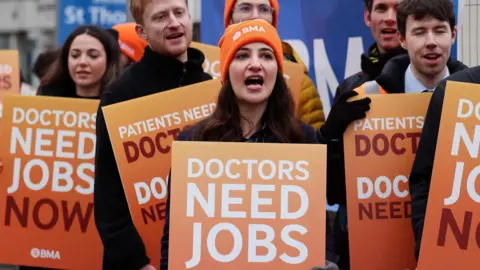
Prime Minister Keir Starmer has issued a stark ultimatum to the British Medical Association (BMA): call off the planned six-day walkout scheduled after Easter, or forfeit 1,000 new specialist training positions.
The prime minister's warning follows the union's decision last week to strike over a proposed compensation package. The government's offer included a 3.5% pay bump, coverage for out-of-pocket expenses such as examination fees, and a significant expansion of training roles.
However, the BMA rejected the terms, arguing that the pay increase fails to offset projected inflation and does not address the severe erosion of resident doctors' salaries that has occurred since 2008.
Writing in an op-ed for The Times, Starmer slammed the union's choice to launch what will be the 15th strike in this grueling dispute, labeling the move as "reckless."
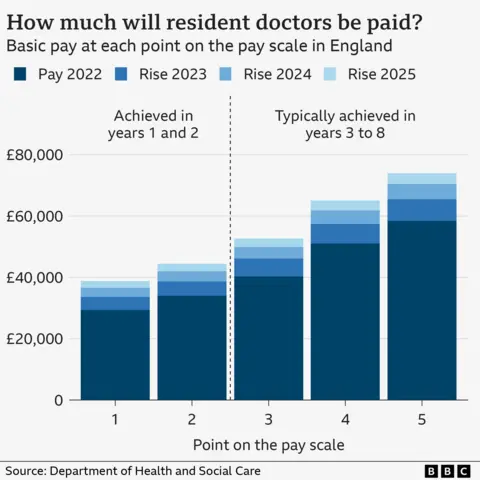
The contested package promised to establish at least 4,000 supplementary specialty roles over the next three years, with an initial 1,000 rolling out this year. It also pledged to accelerate career progression through the five pay bands for resident doctors.
Negotiations have been ongoing since January, following previous strikes in the winter. Notably, the 3.5% pay increase scheduled for April is entirely separate from the disputed talks; it was recommended by an independent review body and will be implemented regardless.
Health Secretary Wes Streeting has stood firm, asserting that resident doctors have already received cumulative salary hikes of nearly 30% over the past three years. Under the current proposal, he noted, top-tier resident doctors would see basic salaries reach £77,348, with average total earnings surpassing £100,000. Additionally, new graduates are now taking home roughly £12,000 more annually than they did three years ago.
In his editorial, Starmer urged union leaders to present the offer directly to their rank-and-file members rather than unilaterally dismissing it.
"Walking away from this deal is the wrong decision. It is a reckless decision. And doing so without even giving resident doctors themselves the chance to vote on it makes it even worse," Starmer wrote. "Because the truth is this: no one benefits from rejecting this deal."
The government insists the 48-hour deadline is driven by logistical necessity. Applications for the upcoming summer training positions go live in April, making Thursday the absolute cutoff to integrate the new jobs into the administrative system. The sheer financial toll of covering the impending strikes is also a major consideration.
Defending the union's stance on BBC Radio 4's Today programme, Dr. Jack Fletcher, chair of the BMA resident doctor committee, accused officials of moving the goalposts at the eleventh hour.
He argued that resorting to "threats about withholding jobs from doctors" while the NHS is already buckling under extreme pressure is fundamentally detrimental to patient care. Fletcher insisted the standoff can only be resolved at the negotiating table.
Highlighting what he described as "decades of pay erosion," Fletcher emphasized that doctors are simply seeking a restorative adjustment, maintaining that a genuinely "credible" offer would immediately halt the strikes.
When pressed on why the union sidestepped a member vote, Fletcher revealed that the government had recently diluted its financial commitment, opting to stretch the investment over three years rather than presenting the terms discussed just a fortnight prior.
"I've been really clear to the Health Secretary in person last week that this does not represent a credible offer, and it does not go far enough," Fletcher stated.
The upcoming industrial action is scheduled to run from 07:00 BST on April 7 until 06:59 BST on April 13. Tying the record for the longest strike in this conflict, it will see the absence of resident doctors, who constitute nearly half of the NHS medical workforce and are predominantly BMA members.
The union continues to highlight a severe professional bottleneck for doctors entering their third year of specialist training. Last summer, roughly 30,000 candidates vied for a mere 10,000 openings—which included international applicants—underscoring why the expansion of training posts was a central pillar of the recent talks.
Meanwhile, the labor unrest threatens to broaden. The BMA plans to ballot senior consultants and specialist doctors in England this May regarding potential strikes of their own, citing deep dissatisfaction with the sluggish pace of pay negotiations and their most recent compensation award.