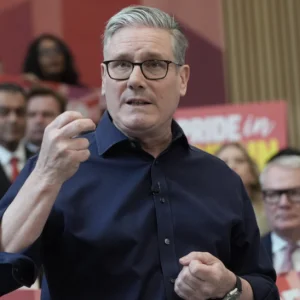
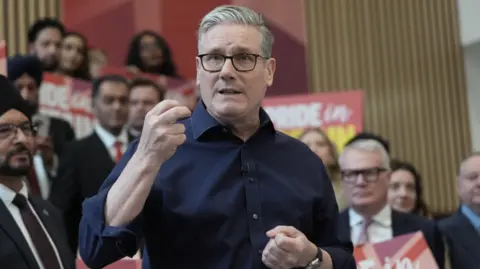
Prime Minister Sir Keir Starmer has officially launched the Labour Party's campaign for the May 7 local elections, centering his pitch to voters in Wolverhampton on easing the cost-of-living crisis amidst mounting global instability.
Acknowledging the public's anxiety over ongoing conflicts in Ukraine and Iran, Starmer focused heavily on the financial toll these wars threaten to take on British households—specifically through rising energy costs. With oil prices under pressure following US and Israeli strikes on Iran last month, the Prime Minister announced immediate government intervention to shield consumers.
Starting Wednesday, an overhaul of green levies will see household energy bills drop by approximately £100. Starmer promised these savings would remain locked in until the end of June, regardless of volatility in the Middle East, though costs are expected to climb again when the energy price cap resets in July.
Beyond domestic economics, Starmer used the campaign launch to forcefully defend his foreign policy stance. Amid escalating pressure—including direct criticism from US President Donald Trump for a perceived lack of involvement—Starmer was resolute that Britain would avoid direct military entanglement in Iran.
"This is not our war," he told the crowd. "We will defend British lives and British interests in the region, will stand by our allies in the Gulf region, but we're not going to get dragged in."
He drew a sharp contrast with his political rivals, accusing Conservative leader Kemi Badenoch and Reform UK's Nigel Farage of being overly eager to plunge the UK into conflict "without thinking through the consequences." Conversely, he argued that electing Green Party leader Zack Polanski would render the nation "weak and exposed."
Pivoting back to household finances, Starmer showcased several key Labour policies scheduled to take effect in April. These include a 50p boost to the minimum wage for workers over 21, bringing it to £12.71 an hour, and an 85p increase for those aged 18 to 20.
Crucially, the government is also scrapping the controversial two-child benefit cap—a major concession following intense lobbying from Labour backbenchers. Additionally, Starmer championed the ongoing rollout of expanded free childcare. The initiative, originally drafted by the Conservatives but fully adopted by Labour, provides eligible working parents with 30 hours of term-time childcare for kids aged nine months to four years.
Despite facing consistently low poll ratings, Starmer insisted the Labour Party is campaigning "on the front foot" and relishing the opportunity to connect with voters. The upcoming May 7 elections will be a massive test for the government, with nearly 5,000 seats up for grabs across 136 English local councils, alongside national parliament elections in Scotland and Wales.