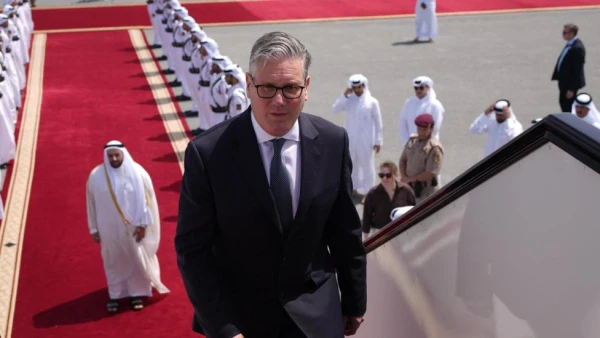
Prime Minister Keir Starmer has declared that the ongoing conflict involving Iran will "define us for a generation," emphasizing the long-term geopolitical and economic consequences during his final day in the Gulf region.
Speaking from his three-day diplomatic tour, Starmer highlighted the fragility of the recent US-Iran ceasefire agreement and stressed that reopening the Strait of Hormuz must be "part of the solution." The vital shipping lane has been largely closed since hostilities began, disrupting oil and fertilizer shipments and contributing to rising petrol and food prices worldwide.
"I'm fed up with the fact that families across the country see their bills go up and down... because of the actions of Putin or Trump," Starmer told ITV in a recent interview, referencing the economic volatility caused by international tensions.
During a conversation with US President Donald Trump, Starmer said they focused primarily on a "practical plan" to restore navigation through the Strait. He noted that Gulf allies agree there should be no "tolling or restrictions on that navigation," countering reported suggestions from Iran.
The UK has assembled a coalition of over 30 nations to address the crisis through political, diplomatic, and military measures, including logistical support for vessel movement. Starmer defended NATO's role, stating it has "kept us much safer than we would otherwise have been" and that US membership remains in America's interest, despite Trump's criticisms of alliance contributions.
"Europeans need to do more... I've been making that argument for the best part of two years to our European partners as much as anybody else," Starmer added, calling for increased European engagement.
His Middle East itinerary included meetings with leaders in Saudi Arabia, Bahrain, the UAE, and Qatar, where he observed "a real desire on their part to work more closely with us on defence resilience, on economic resilience."
Starmer concluded, "That's really important to us, because this is impacting us back at home, on our economy. There's a sense here, as there is, I think, in the United Kingdom, that this conflict is going to define us for a generation and we must respond, and we will respond, with strength."