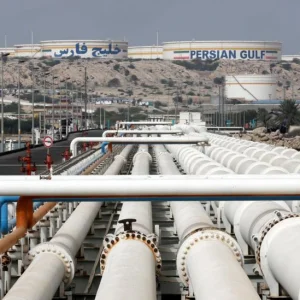
President Donald Trump has floated a bold and perilous military maneuver: deploying American forces to capture Kharg Island, the beating heart of Iran's oil export industry in the northern Persian Gulf. But executing such an operation—and dealing with its explosive aftermath—poses immense strategic and tactical challenges.
Kharg Island is the undisputed linchpin of the Iranian energy economy, processing roughly 90% of the nation's oil exports. Its deep offshore waters are uniquely suited for Very Large Crude Carriers (VLCCs), massive vessels capable of hauling two million barrels of oil. The island is no stranger to conflict, having been a frequent target during the Iran-Iraq War. More recently, on March 13, American forces struck 90 military installations on Kharg, deliberately leaving its lucrative oil infrastructure intact.
If Washington launches a ground invasion, military analysts suggest it would serve as a temporary siege. The objective would be to paralyze Iran's fuel exports, economically bleeding the regime until it lifts its grip on the Strait of Hormuz—a vital global shipping artery—and bows to US demands.
However, forcing Tehran into submission is far from guaranteed.
Mohammad Bagher Ghalibaf, speaker of Iran's parliament, declared that Iranian forces would "rain down fire" upon any American troops stepping foot on the island. Tehran has significantly fortified Kharg's defenses, deploying heavy surface-to-air missile batteries. Furthermore, Iranian officials have condemned Washington for alleged hypocrisy, noting that the US is offering peace negotiations while simultaneously massing troops.
The Pentagon has positioned formidable assets in the region, including 5,000 US Marines and approximately 2,000 paratroopers from the elite 82nd Airborne Division. This massive buildup has fueled intense speculation about a multi-pronged assault on the 20-square-kilometer island.
A tactical playbook could involve a covert nighttime airborne drop by paratroopers to secure critical infrastructure, complemented by an amphibious Marine assault utilizing Osprey tilt-rotors and hovercrafts. Yet, to even reach the shores of Kharg, US naval vessels would have to survive a perilous gauntlet through the Iranian-patrolled Strait of Hormuz, navigating past concealed anti-ship missiles and drone launch sites lining the coast.
While the overwhelming firepower of US Marine Expeditionary Units would likely guarantee initial victory, troops would face lethal swarms of drones and heavily mined beaches, risking significant American casualties.
Capturing the island is only half the battle; holding it is another. Occupying troops would be sitting ducks for relentless bombardment from the nearby Iranian mainland. Military strategists draw parallels to Ukraine's Snake Island, which Russian forces easily captured but eventually abandoned due to devastating, continuous artillery harassment. Furthermore, a prolonged occupation risks severe political backlash within the US, particularly among Trump’s non-interventionist base, who elected him on promises to avoid endless Middle Eastern entanglements.
Adding a layer of intrigue, the loud public chatter surrounding a Kharg Island invasion might be a calculated military feint.
The US could have its crosshairs on other strategic Gulf targets. Options include Larak Island, where Iran is reportedly extorting $2 million tolls from passing tankers; Qeshm, a massive island suspected of housing subterranean drone and missile hubs; or the disputed islands of Abu Musa and the Tunbs. Together, these landmasses form a formidable defensive shield for Tehran, offsetting Washington's conventional military supremacy.
Yet, the entire military escalation could ultimately be a negotiating tactic. Entering the fifth week of the conflict, Trump recently claimed that "serious discussions" are underway with Tehran, which could potentially halt military operations altogether. Whether the US military genuinely plans to storm Kharg Island, or if the threat is simply leverage to force a desperate diplomatic deal, remains the ultimate gamble in a rapidly escalating war.