

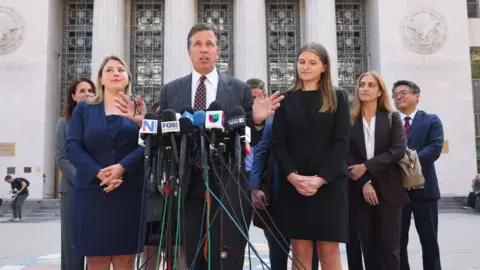
A groundbreaking Los Angeles jury verdict holding Google and Meta accountable for intentionally designing addictive platforms is sending shockwaves across the Atlantic. Tech critics are already dubbing the landmark decision as social media's "big tobacco moment," prompting governments worldwide to reevaluate their digital safety regulations.
In the UK, Prime Minister Sir Keir Starmer indicated that the US trial underscores a massive shift in public sentiment. Acknowledging the growing demand for aggressive regulation, Starmer confirmed his government will study the ruling closely.
"I want to be really clear, it's not if things are going to change, things are going to change," the Prime Minister stated. "The question is, how much and what are we going to do?"
While nations like Australia have already rolled out stringent new digital boundaries for minors, the UK is currently conducting a national consultation to define its legislative approach. The government has framed the issue as an urgent societal challenge, noting the near-universal presence of social media among adolescents and openly floating the possibility of a legally enforced minimum age for users.
Beyond age limits, the inherently addictive architecture of modern social platforms is under the microscope. In the immediate aftermath of the Los Angeles verdict, UK officials reiterated that neutralizing manipulative design features and potentially banning platform access for users under 16 remain central to their strategy. The government maintains that "nothing is off the table" regarding child safety, with the consultation running until late May and a formal policy response anticipated by the end of July.
Political insiders suggest the US ruling has empowered ministers to confidently champion tighter restrictions. However, the Labour government currently finds itself outpaced by opposition figures who are demanding immediate legislative action rather than prolonged reviews.
In a major political standoff, the House of Lords recently defied the government by backing a decisive ban for under-16s. Peers voted 266 to 141 in favor of an amendment spearheaded by Conservative Lord Nash—a move that would force ministers to restrict underage access to specific platforms within a single year.
Shadow Education Secretary Laura Trott heavily criticized the government's hesitance, accusing Labour of choosing bureaucratic delay over decisive child protection. She argued that leaning on yet another consultation "falls well short of the scale of the problem and leaves the door open to weak and ineffective measures."
Prime Minister Starmer has previously been vocal about the harms of digital addiction, writing recently that "never-ending scrolling" is quietly damaging the nation's youth. As domestic political pressure mounts and the global tide turns against tech giants, the critical question remains: just how far is the UK willing to go to rein in social media?