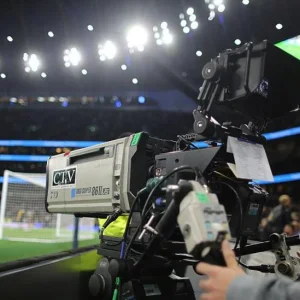
For Everton supporters, the announcement that their late-season clash against Manchester City had been shifted to a Monday night was the breaking point. It marked the seventh time the Toffees were relegated to the Monday 8:00 PM broadcast slot this season, leaving fans with a paltry three traditional Saturday 3:00 PM kick-offs at home.
Fans are rightly asking a simple question: Aren't broadcasters officially capped at five Friday or Monday night picks per club across a 32-match span?
In theory, yes. In practice, the rule is full of loopholes, and match-going supporters are paying the price.
"Another signal of the disregard footballing authorities and broadcasters have for supporters," declared the Everton Fan Advisory Board, noting that the constant scheduling shifts are "placing unacceptable strain on supporters" and that their loyalty is being endlessly stretched.
Everton isn't suffering alone. Manchester United has seen a staggering eight fixtures pushed to a Friday or Monday, including five at Old Trafford—more than a quarter of their home matches. West Ham United sits at seven disrupted games, while Leeds United has endured six.
The root of the problem lies in the sheer volume of televised games combined with the congested European football calendar. With roughly 270 of the Premier League’s 380 matches broadcast live this season, networks desperately need compelling content to fill their premium slots. However, teams competing in the Champions League, Europa League, or Conference League are essentially immune to Friday or Monday fixtures during European game weeks. If these same elite clubs also advance in domestic tournaments like the EFL Cup, their midweek availability vanishes entirely.
This dynamic drastically shrinks the pool of available teams for prime-time Friday and Monday television slots.
Sky Sports, which holds a massive monopoly with four of the five available domestic TV packages, naturally wants to broadcast the most highly anticipated games to the largest possible audience. When European commitments rule out several top-tier clubs, the network inevitably targets the remaining teams boasting the most massive, engaged fanbases.
Consequently, clubs with smaller television audiences are largely left in peace to enjoy the traditional weekend schedule. Burnley, for example, has only been bumped to a Friday or Monday twice this season, boasting a league-high ten Saturday 3:00 PM home games. Brighton has been selected for the Friday/Monday slot just once.
The strain on traveling fans from the heavily-picked clubs is severe. When Manchester United was selected for a Friday night broadcast on March 20, supporters were forced to navigate a grueling, cross-country away trip down to Bournemouth under the floodlights.
So, how do broadcasters get away with ignoring the five-game limit? The secret lies in TV package swapping.
Because Sky controls multiple broadcast packages, the network can manipulate the system to circumvent the rules. For example, Sky might officially select an Everton match for a Saturday evening broadcast package, while picking a Liverpool game for a Monday night slot. If Liverpool is subsequently barred from playing on Monday due to a Champions League fixture, Sky can simply swap the timing of the two matches. Everton ends up playing on Monday night, but because their game wasn't originally picked for the official Monday package, it technically bypasses their maximum limit.
When pressed, neither Sky Sports nor the Premier League would clarify the week-to-week breakdown of these technical selections. Broadcasters maintain that complex logistical hurdles, including club negotiations and local policing requirements, frequently dictate the final schedule.
Looking ahead, the scheduling headache for match-going fans is unlikely to subside. With at least eight Premier League clubs expected to juggle European football next season, the lucrative Friday and Monday broadcast burden will continue to fall squarely on the shoulders of the league's most popular non-European contenders.