Millions of voters across Great Britain are preparing to head to the polls on Thursday, May 7, in what marks the most substantial wave of voting since the 2024 general election.
While citizens in Scotland and Wales will be casting ballots for their national parliaments, voters across England will decide the fate of numerous local councils and mayoralties. Northern Ireland will not participate this cycle, with its next local and Assembly elections slated for May 2027.


England's Local and Mayoral Battles
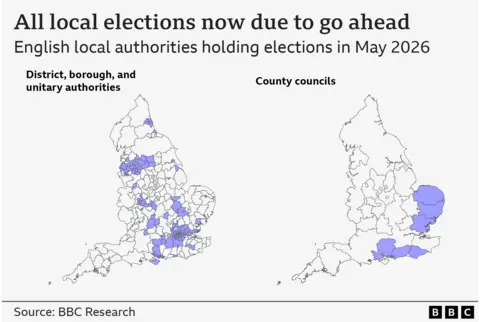
In England, local politics take center stage. Roughly 5,000 seats are up for grabs across 136 councils. The preparation for these polls has been unusually turbulent following a sudden policy reversal by the government.
Initially, ministers had granted 30 local authorities permission to delay their elections until 2027 to accommodate a transition toward new "unitary" council structures. However, following a legal challenge mounted by Reform UK, the government abruptly mandated in February that these elections must take place this May. The sudden U-turn has left local election officials warning of a logistical "uphill struggle" to prepare in time.
Alongside the council races, mayoral elections will be held in six areas: Croydon, Hackney, Lewisham, Newham, Tower Hamlets, and Watford. Other regional mayoral contests, including those in Cumbria, Norfolk, and Sussex, have been postponed until 2027 or 2028.
For English council elections, voters utilize the traditional first-past-the-post system, selecting one candidate per available seat in their local ward.
These newly elected councils will be tasked with managing critical day-to-day services—ranging from elderly social care and education to waste collection and road maintenance. They will have to navigate these responsibilities amidst a widespread funding crisis that has already forced many local authorities to slash services while hiking council taxes.
Deciding the Future at Holyrood
In Scotland, the focus is on the national level as voters elect 129 Members of the Scottish Parliament (MSPs). The outcome at Holyrood will dictate the country's direction on vital devolved matters, including healthcare, education, taxation, and policing.
The Scottish electoral system gives each voter two ballots. The first vote selects a constituency MSP via the first-past-the-post method, filling 73 seats. The second vote is for a regional list, where voters choose a political party or independent candidate. This proportional representation system determines the remaining 56 regional seats, ensuring the final makeup of the parliament closely reflects the overall public vote.
Typically, the party that secures the highest number of MSPs forms the Scottish government, with its leader stepping into the role of First Minister.
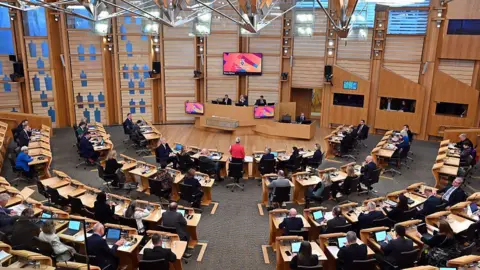
Established in 1999 alongside Scotland's pre-existing legal and educational frameworks, the Scottish Parliament has grown to command a vast array of domestic policies. Holyrood holds the authority to pass legislation on any issue that is not explicitly reserved for the UK Parliament in Westminster.
A Historic Overhaul for the Welsh Senedd
For Welsh voters, the upcoming May 7 polls mark a historic milestone. The Senedd election represents the most sweeping structural change since the devolution of powers to Wales in 1999.
The Welsh Parliament is expanding significantly, increasing its membership from 60 to 96 representatives spread across 16 newly drawn constituencies.
Under the new proportional voting rules, political parties can present a closed list of up to eight candidates per constituency. Voters will cast a single ballot for either a party or an independent candidate, and the 96 seats will be distributed based on the percentage of votes received.
Given the mechanics of this proportional system, it is highly improbable that any single party will secure an outright majority—a feat that has never been achieved in the Senedd's history anyway.
Once the election concludes, the newly elected Members of the Senedd will vote to nominate a First Minister to lead the Welsh government.

The body, which originally opened as the National Assembly for Wales in 1999 before being rebranded as Senedd Cymru, will continue to govern the nation's key domestic issues under this newly expanded framework.