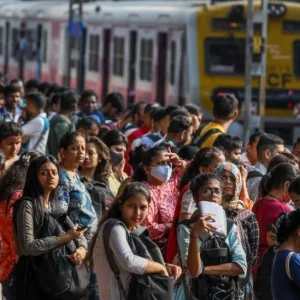
India has officially kicked off the most extensive demographic operation in human history. Starting Wednesday, over three million enumerators will begin the monumental task of surveying more than 1.4 billion citizens, marking the nation's first comprehensive census in over fifteen years.
The massive undertaking comes at a critical juncture. According to the United Nations, India recently surpassed China as the world's most populous nation. Despite its immense size, the country's demographic profile remains incredibly young, with a median age of 28 and nearly 70% of its populace in the working-age bracket. Because the scheduled 2021 census was derailed by the COVID-19 pandemic and subsequent administrative hurdles, policymakers have been operating largely in the dark, relying heavily on outdated 2011 figures to govern a rapidly transforming society.
This historic 16th nationwide count—and the eighth since India gained independence in 1947—will break new ground by going fully digital. For the first time, government staff, local teachers, and officials acting as enumerators will utilize mobile applications to record data. Furthermore, authorities have introduced a self-enumeration option through an online portal available in 16 languages, allowing residents to submit their details independently and generate a unique identification code for later verification.
The massive exercise is divided into two distinct physical phases across India's 36 states and territories, encompassing roughly 640,000 villages and over 9,700 towns.
The first phase, focusing on housing and basic assets, will probe households with 33 specific questions. These inquiries range from assessing living conditions—such as roof materials and staple cereal consumption—to modern connectivity metrics, like whether a home relies on a basic mobile phone or has full internet access. The second phase, scheduled for February 2027, will dive deeply into population demographics, tracking education, fertility, and migration trends.
Crucially, the upcoming census will collect detailed data on caste—a highly debated and politically sensitive issue essential for welfare distribution and political representation. The questionnaire also reflects modernizing societal norms; for instance, couples in stable live-in relationships can now be officially recorded as married.
Preliminary data collection is rolling out in select test regions, including Delhi, Goa, Karnataka, Odisha, Mizoram, and the Andaman and Nicobar Islands. In these areas, the self-reporting window opens in early April, followed by door-to-door housing surveys mid-month.
India's official population count has evolved drastically since its rudimentary colonial-era beginnings in 1872, which essentially served as a basic house register to track religion, caste, and occupation. By the mid-20th century, the focus expanded from simple identification to analyzing economic behavior, land ownership, and modernizing workforce trends.
However, this modern wave of data collection is not without its hurdles. Heightened political discourse surrounding national citizenship registries and voter roll updates has fueled public apprehension. Experts note that these fears could impact data accuracy. Demographers caution that anxieties over perceived exclusion might prompt some families to over-report household members or include absent migrant workers in their tallies.
Despite these anxieties, economists and government officials stress that a fresh census is an absolute necessity. Without a current demographic baseline, India has been forced to steer its vast economy using limited sample surveys. This renewed headcount promises to finally provide an accurate, modernized map of the country's rapidly shifting rural and urban landscapes.