The Conservative Party is pressuring the UK government to eliminate the Value Added Tax (VAT) on household energy bills for the next three years. The proposed tax break aims to cushion British consumers from the looming threat of price spikes triggered by the escalating conflicts in the Middle East.
To bankroll this relief, the Tories are pitching a drastic pivot away from current environmental policies, suggesting the immediate termination of several green levies and renewable energy subsidies.
While some existing government levies are already slated to be scrapped or absorbed into general taxation by April, household energy caps are projected to jump once again in July. The urgency of the situation has intensified following the outbreak of conflict involving Iran, stoking widespread fears that disruptions to global oil markets will translate directly into exorbitant domestic utility bills.
According to Conservative estimates, slashing the current 5% VAT would save a typical household roughly £94 annually based on July's forecasted energy costs. When combined with the termination of green initiatives—such as heat pump subsidies and a 20-year green energy certificate program championed by Labour's Ed Miliband—the party claims average families could keep an extra £200 a year. The broader Tory strategy heavily relies on expanding North Sea oil and gas extraction to boost tax revenues, which they argue will provide further financial breathing room for the public.
Labour has firmly pushed back against the proposals. Exchequer Secretary to the Treasury Dan Tomlinson dismissed the core of the Conservative approach, stating flatly that maximizing North Sea drilling "won't bring bills down." Tomlinson also targeted Conservative leader Kemi Badenoch’s pledge to eliminate the windfall tax on oil and gas giants, arguing that the tax is a vital tool for mitigating the ongoing cost of living crisis.
Meanwhile, Reform UK cried foul over the announcement. Having already built a platform on scrapping energy VAT and green levies, Reform UK's Treasury spokesman Robert Jenrick accused the Tories of policy theft. He pointed out the irony of the situation, noting that the Conservatives spent their 14 years in power implementing the very environmental taxes they now promise to abolish.
The geopolitical backdrop to this domestic political clash is increasingly severe. Iran has effectively blockaded the Strait of Hormuz—a crucial artery for global oil transport—sending wholesale energy prices skyrocketing. In response, Prime Minister Sir Keir Starmer recently convened an emergency Downing Street summit, bringing together executives from major corporate players like BP, Shell, Maersk, and Goldman Sachs to brainstorm strategies for shielding the British economy.
Other political factions are also pitching alternative remedies. The Liberal Democrats claim their strategy to decouple gas prices from electricity costs would cut bills in half by 2035. Conversely, the Green Party is demanding a strict freeze on July's upcoming price cap, arguing the move should be funded by increasing capital gains taxes and tightening levies on energy company profits.

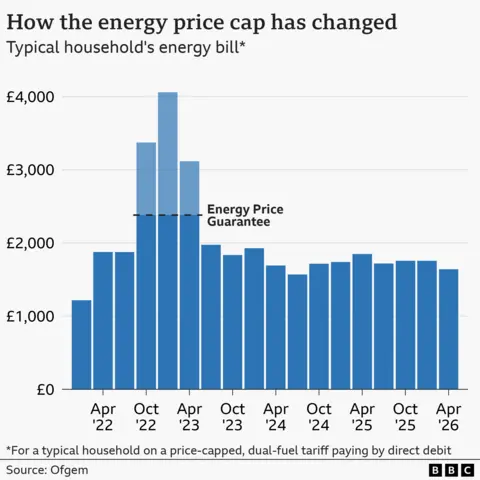
Chancellor Rachel Reeves recently indicated the government would step in to assist "those who need it most" if the broader conflict with Iran causes energy markets to spiral entirely out of control. This targeted welfare approach contrasts sharply with the universal support rolled out under former Conservative Prime Minister Liz Truss following Russia's invasion of Ukraine.
Conservative leader Kemi Badenoch sharply criticized Labour's targeted strategy.
"I know families and business owners across Britain will be very worried about how the global energy crisis will impact them," Badenoch stated. "That's why I find it appalling that Labour's solution is to tax working people to fund a bailout for those on benefits. By drilling in the North Sea and scrapping Ed Miliband's crazy green taxes, our Cheap Power Plan would reduce bills by £200 for everyone."
These latest demands echo Badenoch's recent televised comments, where she insisted that cutting taxes on energy bills must be the government's first line of defense, rather than reaching straight for direct financial bailouts.
