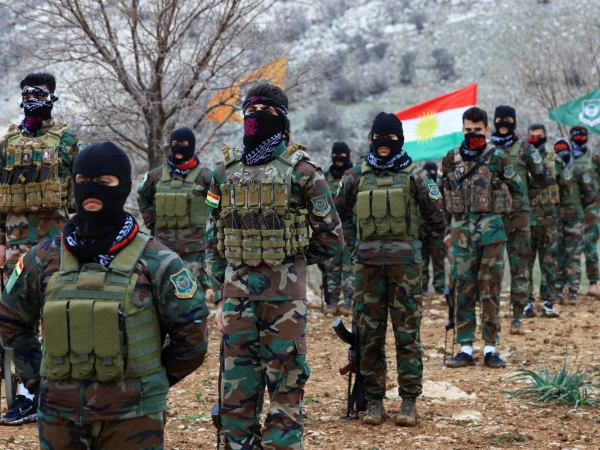
In a recent statement, former U.S. President Donald Trump confirmed that Washington provided arms to Kurdish Iranian opposition groups during the widespread demonstrations in Iran this past January. This admission appears to validate long-standing claims by Iranian authorities, who have repeatedly accused the United States of fueling unrest within the country.
"We supported the Kurdish people in Iran during their fight for freedom," Trump was quoted as saying, directly linking U.S. policy to the internal protests.
The January protests, which erupted across multiple Iranian cities, were initially sparked by economic grievances but quickly evolved into broader anti-government rallies. Iranian officials had consistently alleged that foreign powers, particularly the United States, were orchestrating the dissent by supplying weapons and logistical support to separatist factions.
Trump's remarks mark the first explicit confirmation from a U.S. leader regarding military assistance to Kurdish groups operating within Iran's borders. Analysts suggest this disclosure could further strain the already tense relations between Tehran and Washington, while also raising questions about the extent of covert U.S. involvement in regional conflicts.
The Kurdish opposition in Iran has historically sought greater autonomy, and their involvement in the protests added a complex ethnic dimension to the unrest. With this new acknowledgment, the geopolitical ramifications of the January demonstrations continue to unfold, highlighting the ongoing proxy dynamics in the Middle East.