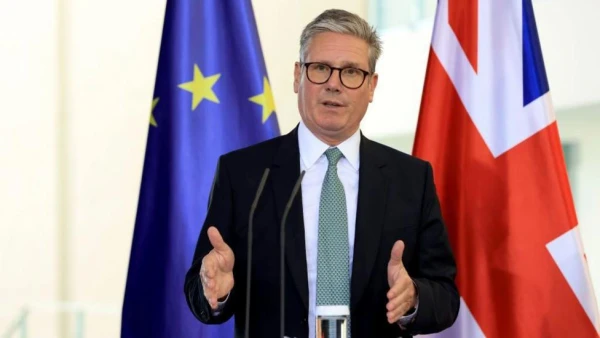
The UK government is preparing new legislation that would allow ministers to adopt European Union single market regulations without requiring a full parliamentary vote each time. This move aims to facilitate "dynamic alignment" with future EU standards, particularly in areas like food safety, carbon pricing, and electricity trading.
Under the proposed system, new rules would be introduced as secondary legislation, which receives less parliamentary scrutiny than primary laws. This approach mirrors the pre-Brexit process when the UK routinely adopted hundreds of EU regulations annually, though it now lacks voting rights within EU institutions to shape those regulations.
Prime Minister Keir Starmer defended the plan, stating: "We're in a world where there's massive conflict, great uncertainty. And I strongly believe the UK's best interests are in a stronger, closer relationship with Europe." He emphasized that easier trade would translate to lower consumer prices.
The government estimates that a planned EU food standards deal alone could be worth billions annually by reducing export bureaucracy. The legislation would specifically enable alignment with EU rules governing food flavorings, animal health, and organic pet food labeling.
Opposition parties have voiced strong objections. Conservative shadow business secretary Andrew Griffith argued the proposal would reduce Parliament "to a spectator while Brussels sets the terms." Reform UK leader Nigel Farage vowed to oppose it "every step of the way," calling it "a backdoor attempt to drag Britain back under European Union control."
Even Liberal Democrat education spokeswoman Munira Wilson, who supports closer EU ties, expressed concern about any move that might "cut Parliament out of the loop," describing such measures as "wrong and undemocratic."
Ministers hope to finalize agreements on food standards and carbon trading at a summer summit with EU officials. The government has also indicated interest in pursuing additional EU deals that align with "national interest principles," including economic growth, investment support, and enhanced security and resilience.
This legislative push comes amid heightened geopolitical tensions, with ministers citing the Iran war as strengthening the case for closer European alignment.