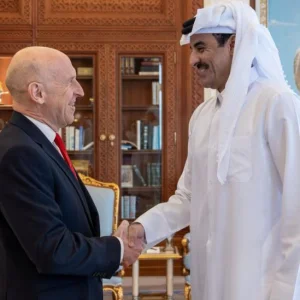

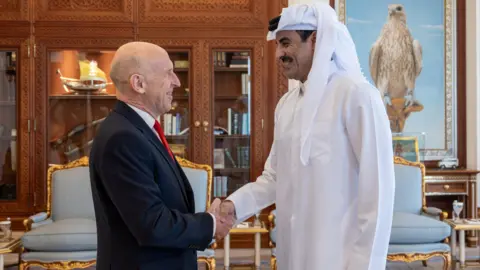
The United Kingdom is significantly boosting its military footprint in the Middle East, deploying additional personnel and advanced air defense systems to counter an escalating wave of Iranian attacks. The move brings the total number of British forces shielding the Gulf and Cyprus to approximately 1,000 troops.
During a diplomatic tour of the region, UK Defence Secretary John Healey confirmed the dispatch of specialized air defense teams to Saudi Arabia, Bahrain, and Kuwait, alongside an extended deployment of Royal Air Force Typhoon fighter jets in Qatar.
"My message to Gulf partners is: Britain's best will help you defend your skies," Healey declared during his visit. He noted that regional leaders view the British military presence as a foundational pillar of their security. With Iran widening its regional offensives, Healey anticipates the current hostilities will persist for several more weeks.
The urgency of the deployments follows recent damage to a Kuwaiti power and desalination facility, prompting warnings from Qatar that civilian infrastructure across the region is increasingly vulnerable.
To counter these threats, Britain is routing its cutting-edge Sky Sabre missile defense system—which features advanced radar and interceptor capabilities—to Saudi Arabia. Meanwhile, Kuwait has received the Rapid Sentry ground-based air defense system, and Bahrain is integrating the UK's Lightweight Multirole Missile launcher into its protective grid with the help of British military experts. Furthermore, the deployment of UK Typhoons stationed at Qatar's Dukhan air base has been formally extended, reinforcing the four additional jets Prime Minister Sir Keir Starmer committed earlier this month.
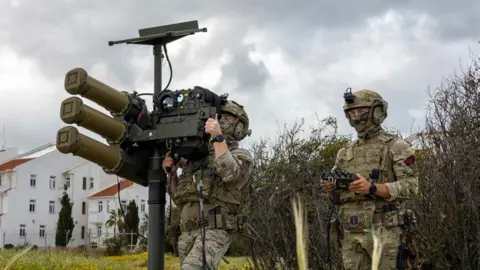
Despite the influx of military hardware, Starmer insists that British troops will not engage in ground combat inside Iran.
"This is not our war and we're not going to get drawn into it," the Prime Minister told reporters, emphasizing a strictly defensive posture. While the UK previously allowed the United States to launch defensive operations from British bases, it notably blocked their use for the initial US-Israeli offensive strikes against Iran in February.
This cautious approach has drawn the ire of US President Donald Trump, who publicly blasted the UK and other NATO allies for relying on American protection. Taking to his Truth Social platform, Trump suggested nations dependent on fuel traversing the Strait of Hormuz need to secure it themselves.
"All of those countries that can't get jet fuel because of the Strait of Hormuz, like the United Kingdom, which refused to get involved in the decapitation of Iran, I have a suggestion for you," Trump wrote. "Number 1, buy from the U.S., we have plenty, and Number 2, build up some delayed courage, go to the Strait, and just TAKE IT. You'll have to start learning how to fight for yourself."
Healey brushed off the President's rebukes, emphasizing the unshakable intelligence and military bonds between Washington and London. He also revealed that a Royal Navy vessel is preparing to deploy autonomous mine-clearing drones in the Strait of Hormuz to keep the vital shipping lane navigable, an effort he stressed requires a unified international coalition.
Back in London, Starmer is facing political fire from all sides. A Conservative Party spokesperson branded the Prime Minister's strategy as "confused and chaotic," accusing him of promising non-intervention while simultaneously funneling troops into a conflict zone.
The Liberal Democrats are demanding the government release the legal rationale justifying the new deployments. While voicing support for protecting allies, Lib Dem foreign affairs spokesperson Calum Miller warned Starmer against letting Trump "drag Britain down the path to war."
Meanwhile, the Green Party has condemned the UK's indirect involvement altogether. Co-leader Zack Polanski released a video urging the government to ban US bombers from utilizing British airspace, arguing that facilitating the strikes makes the UK a needless accomplice in the broader Middle Eastern conflict.