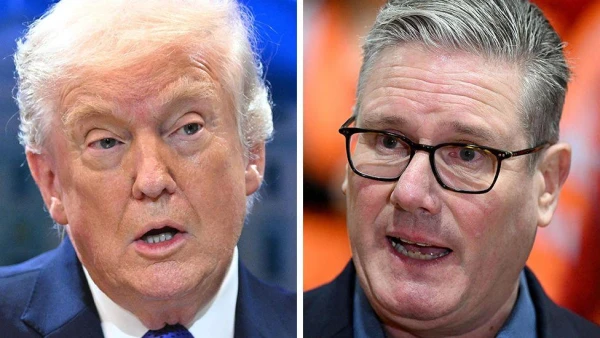
Prime Minister Sir Keir Starmer has declared that the United Kingdom will not participate in the U.S.-led military blockade of Iranian ports in the Strait of Hormuz, marking a significant divergence in allied strategy amid heightened Middle East tensions.
Speaking to BBC 5 Live, Starmer emphasized that British naval forces, including minesweepers and anti-drone units, will continue operations in the region but will not be deployed to enforce the blockade announced by former U.S. President Donald Trump. Instead, the UK's diplomatic and military efforts are concentrated on reopening the critical shipping channel to stabilize global energy markets.
"We're not supporting the blockade and all of the marshalling diplomatically, politically and capability... that's all focused, from our point of view, on getting the Strait fully open," Starmer stated.
The U.S. blockade threat followed the collapse of peace talks between U.S. and Iranian negotiators in Islamabad, Pakistan. Trump announced the U.S. would begin "BLOCKADING any and all Ships trying to enter, or leave, the Strait of Hormuz," a move later confirmed by U.S. Central Command (Centcom).
Starmer, who recently returned from a visit to the Gulf region, reiterated his stance against direct UK military involvement in the conflict, stating, "My decision has been very clearly that whatever the pressure - and there's been some considerable pressure - we're not getting dragged into the war."
The strategic waterway handles approximately one-fifth of global oil and liquefied natural gas shipments. Its effective closure by Iran since late February, following U.S.-Israeli strikes, has driven global benchmark Brent crude oil above $100 per barrel, up from approximately $71 before the conflict.
In response to the economic pressure, the UK government is reviewing a planned September increase in fuel duty, with Starmer noting the decision is "being kept under review" and "a lot will depend on what happens in the next few weeks."
Diplomatically, the UK is coordinating with France to host a summit this week aimed at developing "a coordinated, independent, multinational plan to safeguard international shipping when the conflict ends." Starmer also underscored in a call with French President Emmanuel Macron "the need to work with a wide coalition of partners to protect freedom of navigation" in the strait.
A UK government spokesperson added that ships "must not be subject to tolling," referencing reports that Iran has begun demanding $2 million in transit fees for tankers passing through the Strait of Hormuz.
While the UK was not involved in the U.S.-Iran talks, Starmer warned against "further escalation" in the region following the failed negotiations. Chancellor Rachel Reeves is scheduled to travel to Washington for an International Monetary Fund meeting to advocate for reopening the shipping channel.
Trump has claimed that other nations, including NATO members, would assist in the blockade and minesweeping operations, specifically mentioning the UK. However, Starmer's announcement firmly places British policy on a different trajectory, prioritizing diplomatic coalition-building and the restoration of open navigation over military enforcement of a blockade.