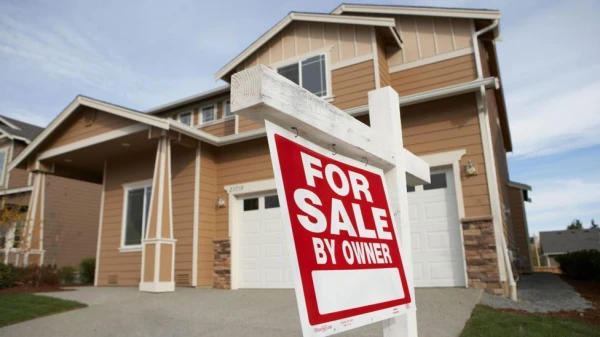
The US housing market is experiencing a significant slowdown, with home sales dropping to their lowest point in nine months as geopolitical tensions in the Middle East drive up mortgage rates and create widespread uncertainty among buyers.
According to the National Association of Realtors (NAR), existing home sales fell by 3.6% in March, reaching 3.98 million transactions—the lowest figure since June. This decline reflects agreements made before recent military actions but signals underlying market fragility.
Average rates for a standard 30-year fixed mortgage have climbed to 6.37%, up from 5.98% before strikes began in February. This increase is largely attributed to expectations that the Federal Reserve will maintain higher interest rates to combat inflation, rather than implementing anticipated cuts.
"Some buyers feel like they're frozen—they don't know how to make their decisions because events like the ones we're talking about spring up so rapidly and so out of our control," said Andrew Vallejo, a real estate agent in Austin, Texas.
Thomas Ryan, North America economist at Capital Economics, noted that indicators point to "weakening housing demand following a recent jump in mortgage rates and a collapse in consumer confidence," both of which he described as "knock-on effects" of the conflict.
Limited housing inventory has pushed the median home price to $408,800, a 1.4% increase from the previous year. NAR chief economist Dr. Lawrence Yun attributed March's sales figures to declining consumer confidence and a softening job market.
Vallejo warned that the situation could deteriorate further if rising energy prices trigger broader economic challenges. "It's a topic of concern that we're all aware of because it would make people lose jobs," he explained. "A lot of it has been buyers feeling like they should either wait a little bit... and then for sellers, I think that in their mind they were hoping it would be a bit of a less chaotic world this year."
Analysts had initially projected 2026 as a recovery year for the housing sector, but those expectations have been dampened by the rapid escalation of mortgage rates and ongoing geopolitical instability.