In the race to build the world’s most resilient long-haul aircraft, Airbus subjected its A350 to a grueling gauntlet of environmental trials—from the frozen tundras of Canada to the scorching deserts of the Middle East and the thin air of the Andes. The goal? To prove that the A350 could not only survive but thrive in conditions that would ground lesser planes.
Before the A350 could earn its wings in commercial service, Airbus put the aircraft through a battery of extreme tests designed to push its engines, systems, and structure to the breaking point. The results would determine whether the A350 could handle the world’s most punishing routes, including Singapore Airlines’ nonstop flights between Singapore and New York—a journey that pushes the limits of modern aviation.
Freezing the A350 in the Arctic
In January 2014, Airbus dispatched its A350-900 development aircraft, MSN3, to Iqaluit, Canada, where temperatures plummeted to -28°C. A team of 48 specialists spent weeks assessing how the aircraft’s engines and systems fared in the deep freeze. The most critical test? Starting the engines and auxiliary power unit after a prolonged cold soak—a period where the aircraft was left exposed to the biting cold. Engineers also evaluated low-speed taxiing, rejected takeoffs, and short test flights to ensure the A350 could operate safely in such harsh conditions.
“If an aircraft can’t start in -40°C, it can’t take off in the Arctic. The A350 passed with flying colors.” — Airbus Test Pilot
Torching the A350 in the Desert
Just three years later, Airbus turned up the heat. In July 2017, the A350-1000 test aircraft, MSN065, was flown to Al Ain International Airport in the United Arab Emirates, where the mercury soared past 40°C—peaking at 48°C. The mission? To verify that the A350’s Rolls-Royce Trent XWB engines and cabin air-conditioning systems could handle the relentless desert sun without overheating or compromising passenger comfort.
Scaling the Andes: The High-Altitude Challenge
High-altitude airports present another set of hurdles. In Bolivia, Airbus tested the A350 at El Alto International Airport in La Paz, perched 4,061 meters (13,325 feet) above sea level. At this elevation, air density is a mere 40% of what it is at sea level, forcing engines to work harder for less thrust and wings to generate less lift. The A350’s trials here confirmed it could safely take off and land in these demanding conditions, a critical milestone for airlines operating in mountainous regions.
The A350’s Secret to Ultra-Long-Haul Success
The A350’s endurance isn’t just about surviving extreme environments—it’s about redefining what’s possible in air travel. The aircraft’s composite fuselage resists corrosion and fatigue, while its advanced cabin pressurization system maintains a comfortable 6,000-foot cabin altitude and higher humidity than older jets. These features are essential for flights lasting 18 hours or more, where passenger well-being becomes a top priority.
Airlines like Qantas are betting big on the A350’s capabilities with Project Sunrise—a bold initiative to launch nonstop flights from Sydney to London and New York using a specially configured A350-1000ULR. The variant boasts an extra 5,283-gallon fuel tank, allowing it to cover distances that would have been unthinkable just a decade ago.
A Legacy of Reliability
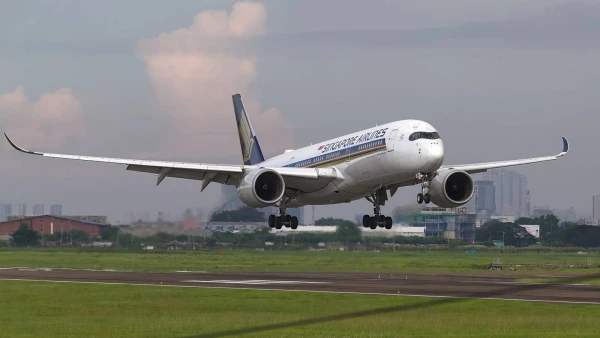
Singapore Airlines’ existing A350-900ULR operations have already proven the aircraft’s mettle on ultra-long-haul routes. Now, Qantas is preparing to put the A350-1000ULR to the test, incorporating tailored cabin lighting, optimized meal schedules, and a Wellbeing Zone to help passengers and crew cope with the physical toll of near-20-hour flights.
The A350’s journey from Arctic freeze to desert heat to Andean peaks is more than a test of engineering—it’s a testament to human ingenuity. As airlines push the boundaries of what’s possible in aviation, the A350 stands ready to meet the challenge, one extreme condition at a time.