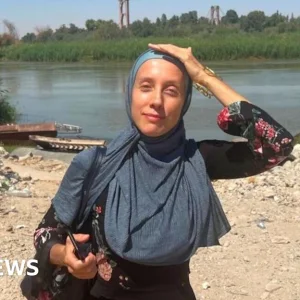
American freelance journalist Shelly Kittleson was abducted in Baghdad on Tuesday evening, sparking a massive international recovery effort involving US and Iraqi security forces.
The kidnapping, reportedly carried out by individuals tied to the Iran-backed militia Kataib Hezbollah, occurred near a hotel in the center of the Iraqi capital. According to the Iraqi Interior Ministry, local security forces immediately launched an intensive pursuit based on precise intelligence. The high-speed chase concluded when one of the getaway vehicles overturned, resulting in the apprehension of at least one suspect.
In a chilling revelation, US officials confirmed that Kittleson had been repeatedly warned of an impending threat to her safety. Dylan Johnson, the US Assistant Secretary of State for Global Public Affairs, stated that the government had "fulfilled our duty to warn this individual of threats against them."
According to Alex Plitsas, a CNN national security analyst acting as Kittleson's emergency contact, the journalist was explicitly told that Kataib Hezbollah had a target list that included her name as part of a broader plot to abduct or assassinate female reporters. The final warning was delivered on Monday night, just hours before her capture. However, sources indicate Kittleson may have dismissed the intelligence as false information.
Al-Monitor, a US-based news outlet that frequently publishes Kittleson's work, expressed deep alarm over the incident and issued a strong plea for her "safe and immediate release."
A massive, coordinated effort is now underway to rescue the seasoned conflict reporter. Authorities working on the case include the FBI, the US National Security Council, Delta Force, and the Iraqi Counter-Terrorism Service.
"The Ministry affirms that efforts are ongoing to track down the remaining perpetrators and secure the release of the abducted woman, and to take due legal action against all those involved in this criminal act," the Iraqi Interior Ministry said in a translated statement.
Kittleson, who is primarily based in Rome, has built a career reporting from volatile conflict zones across the Middle East, including extensive coverage of Syria, Afghanistan, and Iraq. While Baghdad was once a global hotspot for abductions, the frequency of such incidents had dropped significantly in recent years as the region's security environment stabilized.